Mobile network to detect drones
10. August 2026
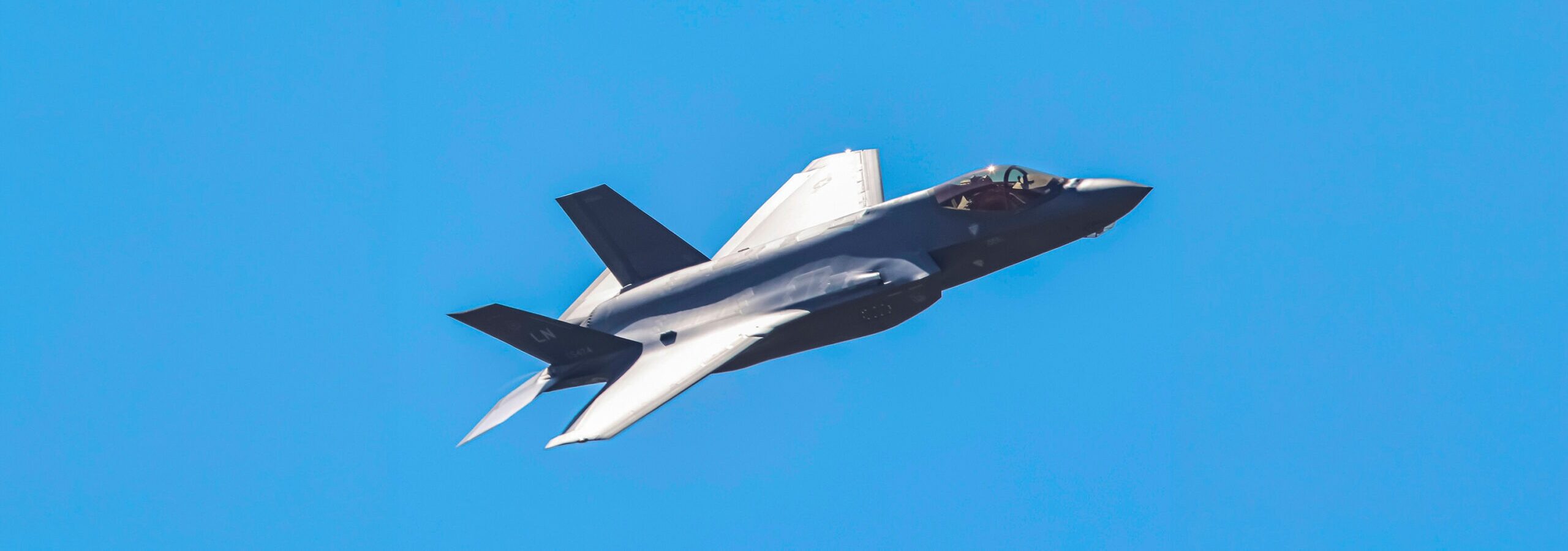
Rheinmetall has built a state-of-the-art factory in Weeze in record time to manufacture fuselage components for the world’s most advanced stealth fighter aircraft, the F-35 Lightning II. This is a €200 million investment in European security, ensuring Germany’s future as a technology hub.
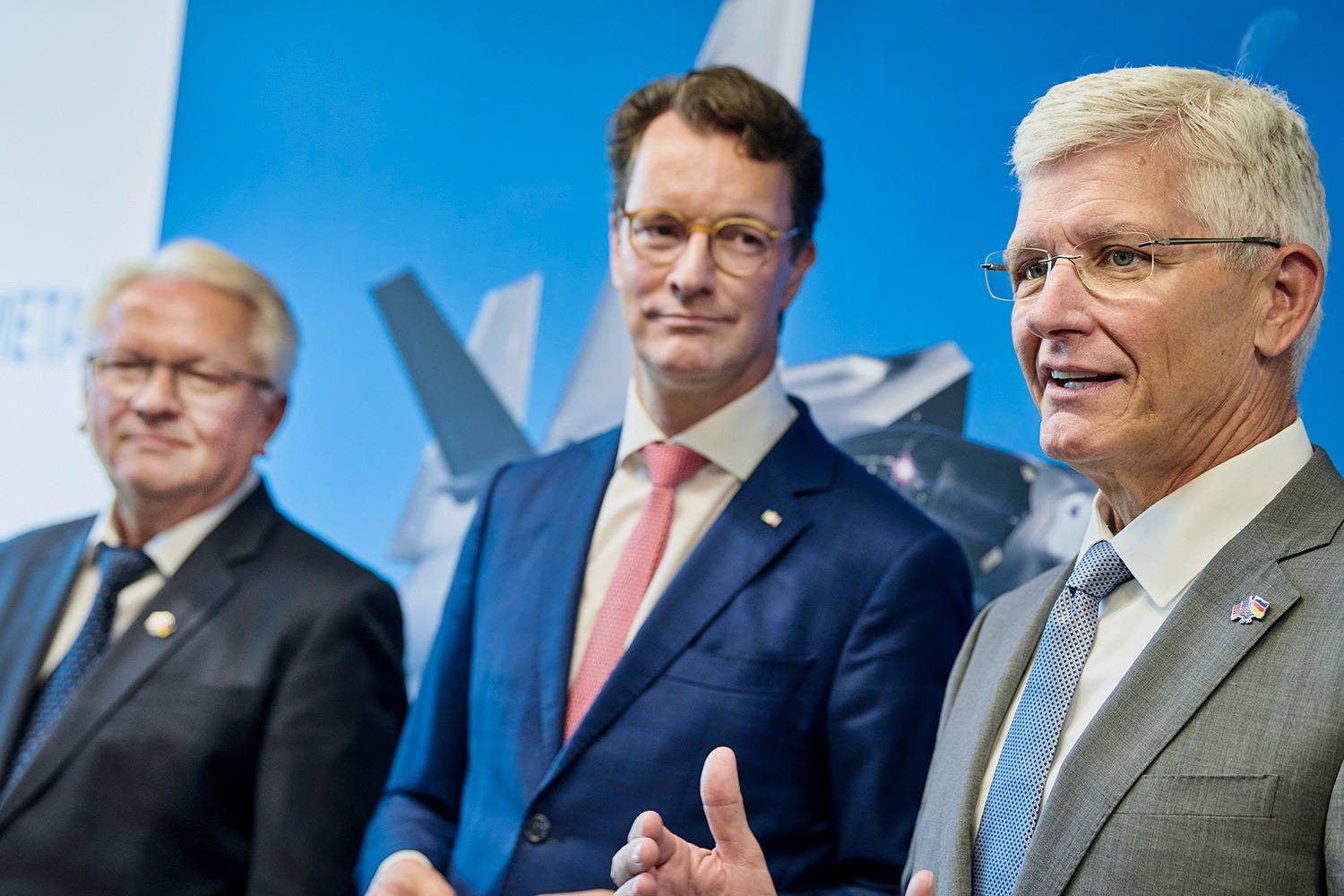
At the opening of the factory in July 2025, Stephen O’Bryan (Northrop Grumman manager), Henrik Wüst (Prime Minister), and Armin Papperger (Rheinmetall CEO) emphasised the importance of such major industrial projects for the transatlantic partnership.
Until now, Weeze’s nationwide popularity was mainly due to cheap flights to Mallorca and the annual Parookaville music festival held at the airport. However, this small town in the district of Kleve is now making a name for itself in a completely different way. Since the summer of 2025, it has been the site of production for the “heart of the Lower Rhine’s fighter jets” (Frankfurter Allgemeine Zeitung) – a symbol of Germany’s new direction in security policy. Here, Rheinmetall is manufacturing 400 centre fuselage sections for the F-35 fighter jet on behalf of the US corporation Northrop Grumman. Following the start-up phase, the new plant is set to produce up to 36 of these sections each year. The 30,000-square-metre factory for the fifth-generation stealth fighter is located in the immediate vicinity of Weeze Airport. Construction took less than a year and a half, and North Rhine-Westphalia’s Minister-President, Hendrik Wüst, visited the site for the inauguration ceremony. The head of government explained that the new facility represents a “significant contribution to this new era and to Europe’s collective security”.
A new role in aviation
Rheinmetall Aviation Services GmbH operates this state-of-the-art production facility. Founded in Bremen in 2019, the subsidiary of Rheinmetall AG embodies the Group’s growing ambitions in the field of military aviation. Initially established as a strategic service provider for maintenance and repairs, the company now also manufactures key aircraft components. Until 2026, the company was responsible for managing the CH-53G helicopter fleet at Bundeswehr bases in Diepholz, Laupheim, and Holzdorf, providing services ranging from basic and full scale maintenance to repairs and daily support for flight operations. However, as the model is being phased out, this service will end in the near future.
Transatlantic partnership
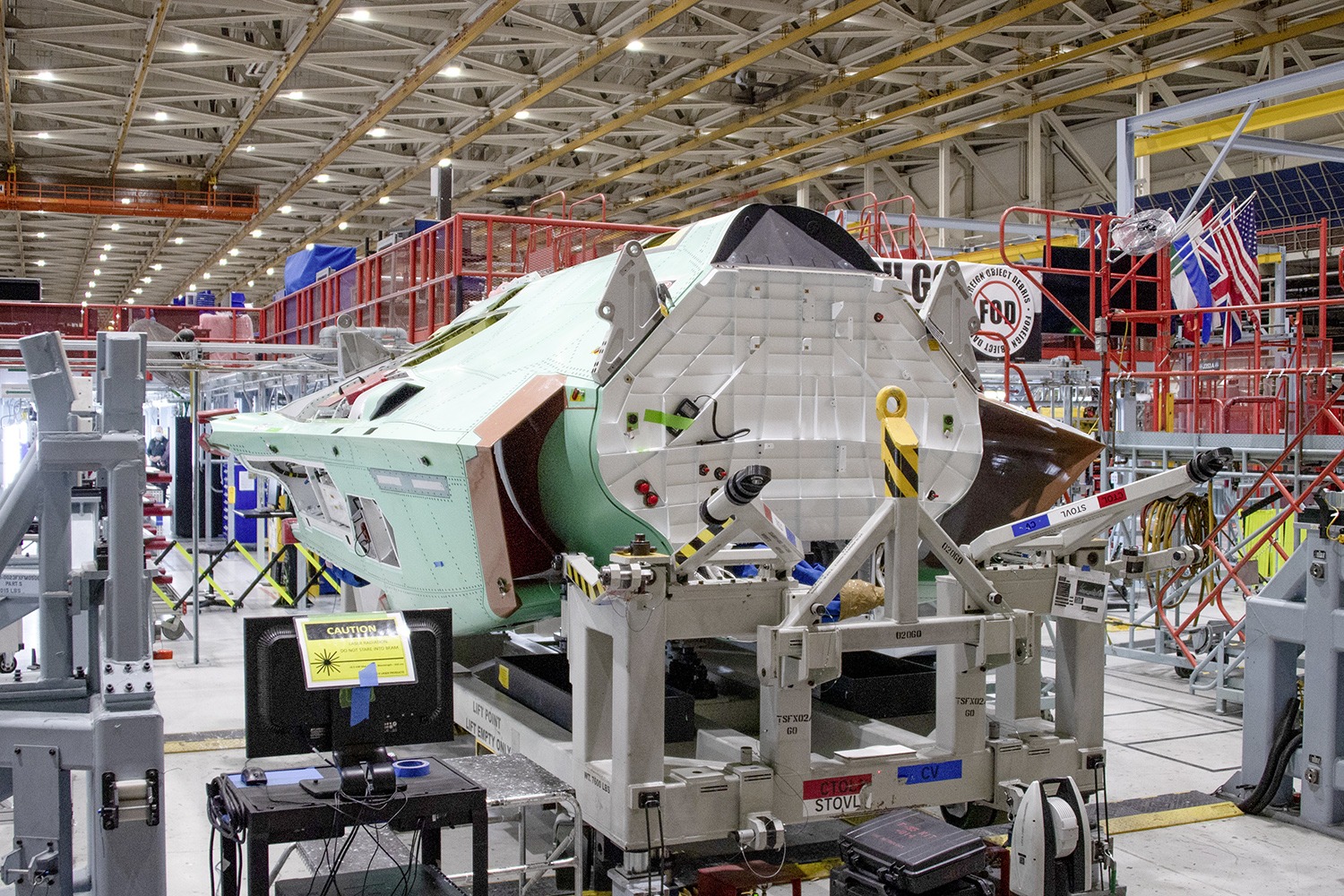
In February 2023, Rheinmetall, Lockheed Martin, and Northrop Grumman signed a letter of intent for the construction of F-35 fuselage centre sections in Germany. The aim was to establish an integrated assembly line and increase the share of the F-35 programme held by the European industry. While Lockheed Martin is responsible for development, sales, and final assembly as the prime contractor, Northrop Grumman supplies key technologies such as sensors, avionics as well as aircraft and training software. The fuselage centre section manufactured by Rheinmetall is a vital component of the F-35, connecting avionics, weapon systems, fuel cells, electrical and hydraulic systems, and parts of the propulsion system. The new Rheinmetall production line in Weeze is very similar to the one operated by Northrop Grumman in Palmdale, California.
Why Weeze?
The decision to choose Weeze as the appropriate location followed an intensive search. Out of over 70 potential sites in twelve of the German federal states, the 60,000-square-metre site on the Lower Rhine was ultimately chosen. Decisive factors included its proximity to the airport, favourable ground conditions, and the support of local and state politicians. The proximity to the industrial centres of the Ruhr region and the Rhineland was another key factor. Just under 18 months passed between the groundbreaking ceremony in late summer 2023 and the start of production in July 2025.
Long-term perspective
The production of 400 F-35 Lightning II fuselage centre sections is scheduled to continue for at least 20 years. This secures the site’s long-term future – well beyond 2040. Around 400 highly skilled jobs will be created. Not only will Weeze become part of a global supply chain, it will also become a visible symbol of the turning point in European security policy.

Click here to receive push notifications. By giving your consent, you will receive regular updates about new articles on the Dimensions website. This notification service can be cancelled at any time in your browser settings or your mobile device settings. Your consent expressly also covers data transfers to third countries. Further information can be found in our privacy policy under Section 5.