
Mobile network to detect drones
10. August 2026
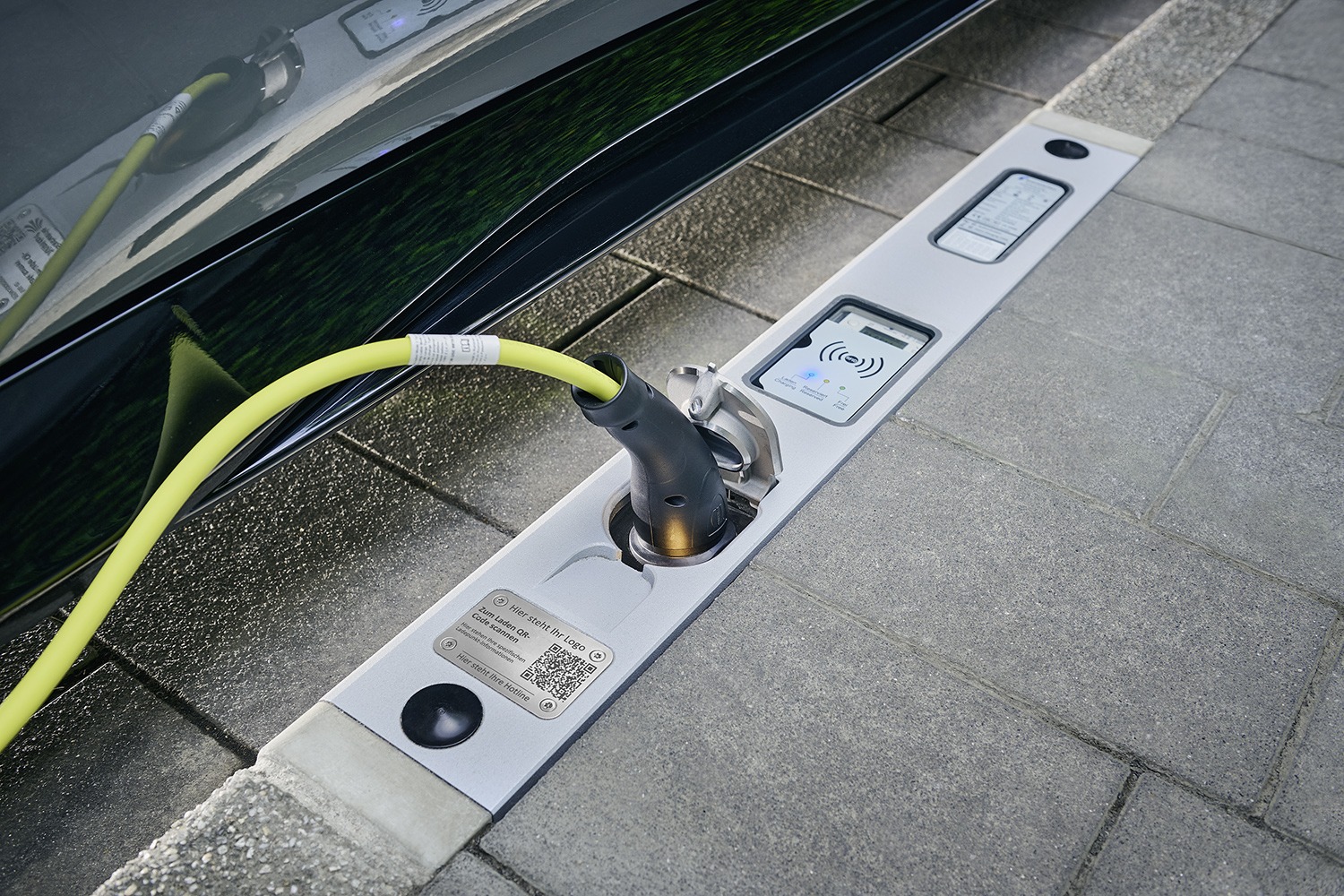
In light of the steady growth in electromobility, the Rheinmetall Technology Centre has developed an innovative component for charging infrastructure in collaboration with the Emerging Technologies business section. These novel curb chargers are now being fully handed over to the operational unit as part of the upcoming industrialisation process. However, the saying still holds true: standing still means falling behind!
Handover
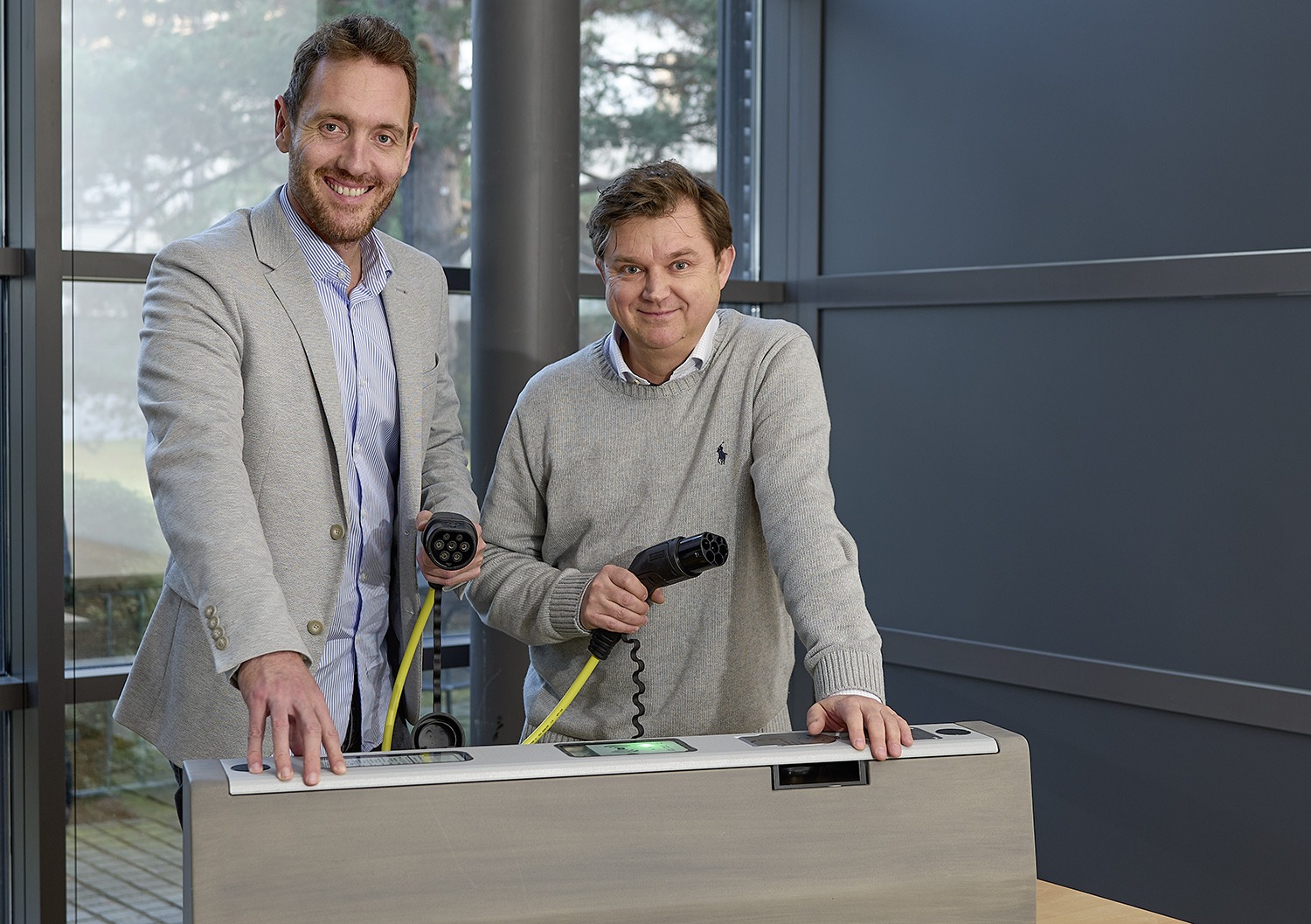
From now on, the industrialisation of the curb charger will be handled by the Emerging Technologies business section within Rheinmetall’s Power Systems division. Dr Dirk Kamarys (right), head of the section, is taking over from developer Dr Felix Stracke of the Rheinmetall Technology Centre.
As early as mid-2024, Rheinmetall had launched a pilot project for its newly developed curb charger together with the charging point operator TankE. In the Cologne urban area and a surrounding community, this form of kerbside charging was tested extensively under real-life conditions. The study examined acceptance and frequency of use among e-mobility users, as well as the reliability, ergonomics, and overall technical availability of the technology. This pilot phase was deliberately designed to run for a relatively long period to cover all seasons and their specific requirements.
In the meantime, a great deal of electricity has flowed through the charging devices, generating international interest in this unconventional method of “fuelling” electric vehicles. As a result, the first curb chargers are already in use in several cities, including Düsseldorf, Cologne, Dortmund, and Braunschweig. Further installations in Hamburg, Stuttgart, Leipzig, and Potsdam are currently being planned. The developers have also seen equally high levels of private interest.
“Nevertheless,” says Dr Dirk Kamarys, Head of the operational business unit, “our target market will remain the B2B sector. The reasons for this is the potential quantity, not to mention our company’s existing key account sales structure. This sector alone is already a highly attractive market for us.”
“Our system is needed”
Added to this is the unique positioning of Rheinmetall’s curb charger, which is protected by a large number of patents. Dr Felix Stracke, who is responsible for the basic concept of the curb chargers alongside his team, and who has also played a key role in their development for series production, comments: “At present, the proportion of electric or electrified vehicles in the total vehicle fleet is still in the single-digit percentage range. However, based on current trends and not least the renewed government funding, it is already clear today that we will need 10 to 15 times the current public charging infrastructure in the future. It is impossible to imagine covering this demand in our urban landscapes with charging stations alone. That is the reason why our system is needed!”
Award-winning product design
This is the general justification for the system, which has already demonstrated an impressive availability of over 99 per cent, even in its pilot phase. Conventional charging points typically achieve 95–97 per cent availability. This is a remarkable achievement, given that the developers in Neuss and their colleagues in the business section are operating in an entirely new branch. Nevertheless, they have developed their new product to perform reliably even under harsh environmental conditions, a product that has also been honoured with the renowned Red Dot Design Award.
Better than charging stations
developers of the Curb Charger wanted to gather as much objective feedback as possible, so they collaborated with the operators to conduct a case study. This involved analysing anonymous reviews from over a hundred customers who had used the chargers. Overall, the feedback was extremely positive. Any limitations perceived by e-mobility users in terms of the visibility of the charging points, which were not yet listed in the relevant apps during this initial phase, were more than compensated for by their high charging stability and reliability, as well as the innovative appeal of this novelty.
Compared with conventional charging stations, the curb chargers received better ratings for accessibility and easy handling. Additional advantages included an improved cityscape, preserved sightlines, clear pavements, and low susceptibility to vandalism. Last but not least, the technology is so robust that even being accidentally driven over does not really matter. Charging point operators also quickly became real fans of the curbs.
No electricity, no revenue
Long-term availability is a crucial factor in the overall cost analysis, particularly with regard to charging infrastructure. In addition to reliability, another important factor to consider is how quickly the charging point can be repaired in the event of a failure, since the operator inevitably loses revenue during any downtime. Again, the new technology scores highly in this respect, as the electronic module can be replaced within a short time if it shows a malfunction. However, this is by no means the end of the modules’ development story. Examples include an expanded international service network, bi-directional charging, replacing special concrete with grey cast iron, and a special cable protection programme. After all, the same principle applies: better is the enemy of good!
More information about Rheinmetall’s innovative curb charger can be found here.

Click here to receive push notifications. By giving your consent, you will receive regular updates about new articles on the Dimensions website. This notification service can be cancelled at any time in your browser settings or your mobile device settings. Your consent expressly also covers data transfers to third countries. Further information can be found in our privacy policy under Section 5.