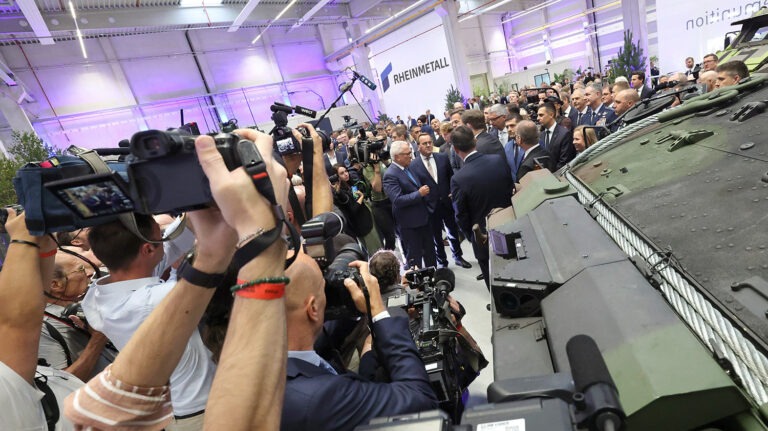
Weapons, yes – but safely!
6. July 2026
8. July 2026
The former Pierburg plant in Berlin is undergoing a fundamental transformation as a supplier site: moving away from the struggling automotive industry towards the growing armaments sector. Since July 2025, the company has been operating in Berlin under the name Rheinmetall Waffe Munition GmbH, thereby securing the future of 300 jobs in the German capital.

Rheinmetall Waffe Munition GmbH, Berlin
The former Pierburg site, located in the heart of Berlin, has been part of Rheinmetall Waffe Munition GmbH since 1 July 2025. The Rheinmetall subsidiary, which is headquartered in Unterlüß in the state of Lower Saxony, specialises in developing and producing weapon systems and ammunition.
Business areas
From mid-2026, the plant in Berlin’s Gesundbrunnen subdistrict will produce components for 155 mm artillery ammunition and warhead components for loitering munition, supplying Europe’s largest large-calibre ammunition factory in Unterlüß.
Employees
300
Annual production volume
250.000
components (from 2027)
The Gesundbrunnen subdistrict of Berlin has a long industrial tradition. As early as the 19th century, large factory buildings, such as those belonging to the locomotive manufacturer Schwartzkopff, dominated the townscape. Until recently, Rheinmetall subsidiary Pierburg manufactured valves, pumps, and cooling water systems for the automotive industry on this historic site, not far from Humboldthain train station.
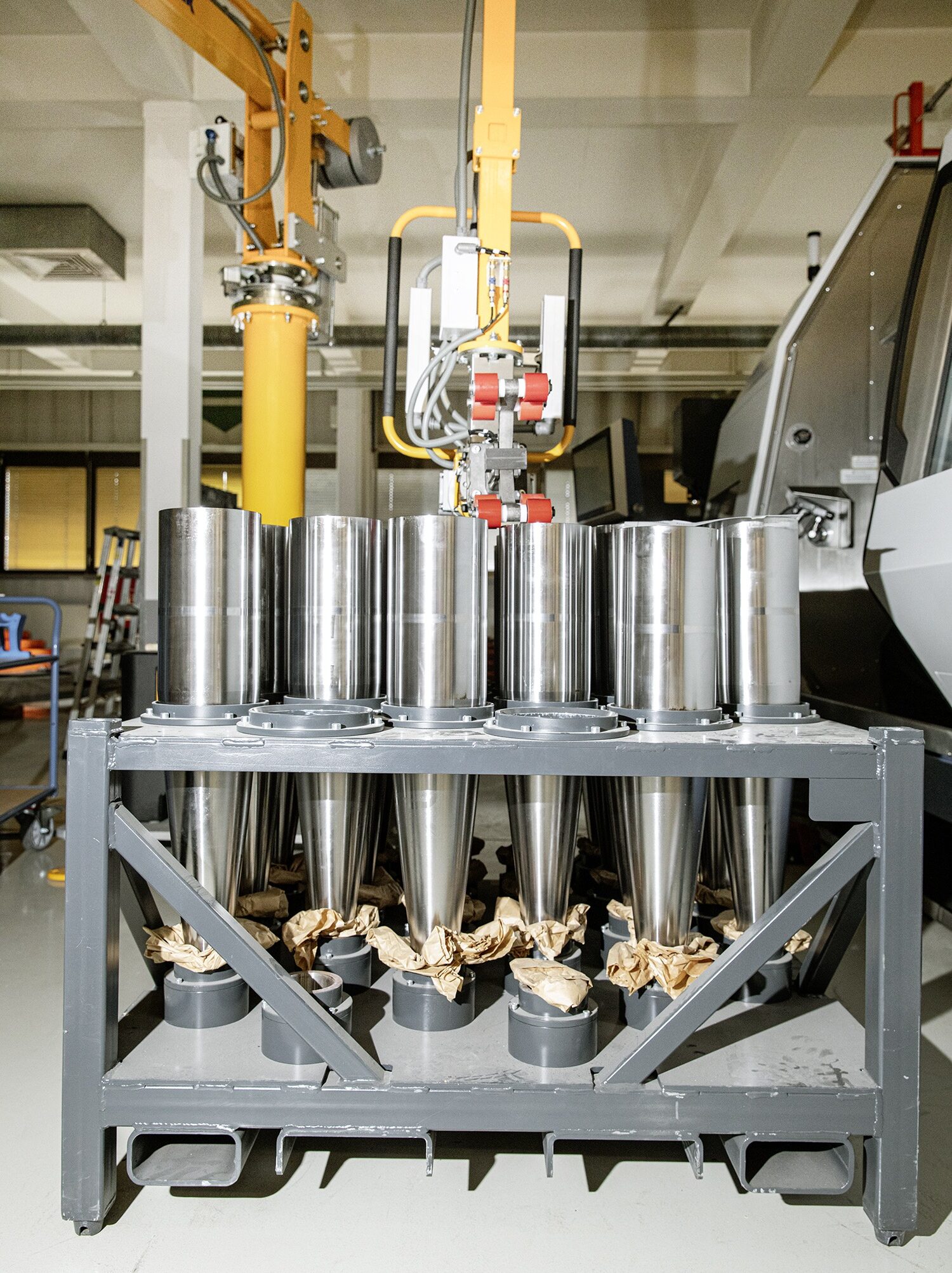
Everything has changed since last year. Rheinmetall strategically realigned its business. Going forward, the Group intends to focus exclusively on its armaments business. Negotiations regarding the sale of the Power Systems civilian automotive division, which includes Pierburg, are expected to conclude in spring 2026. However, the Berlin plant is unaffected. Since July 2025, the site has belonged to Rheinmetall Waffe Munition GmbH. Soon, 80-centimetre-long, 42-kilogramme projectile bodies for 155-millimetre NATO-standard-calibre artillery ammunition will be hardened and processed here.
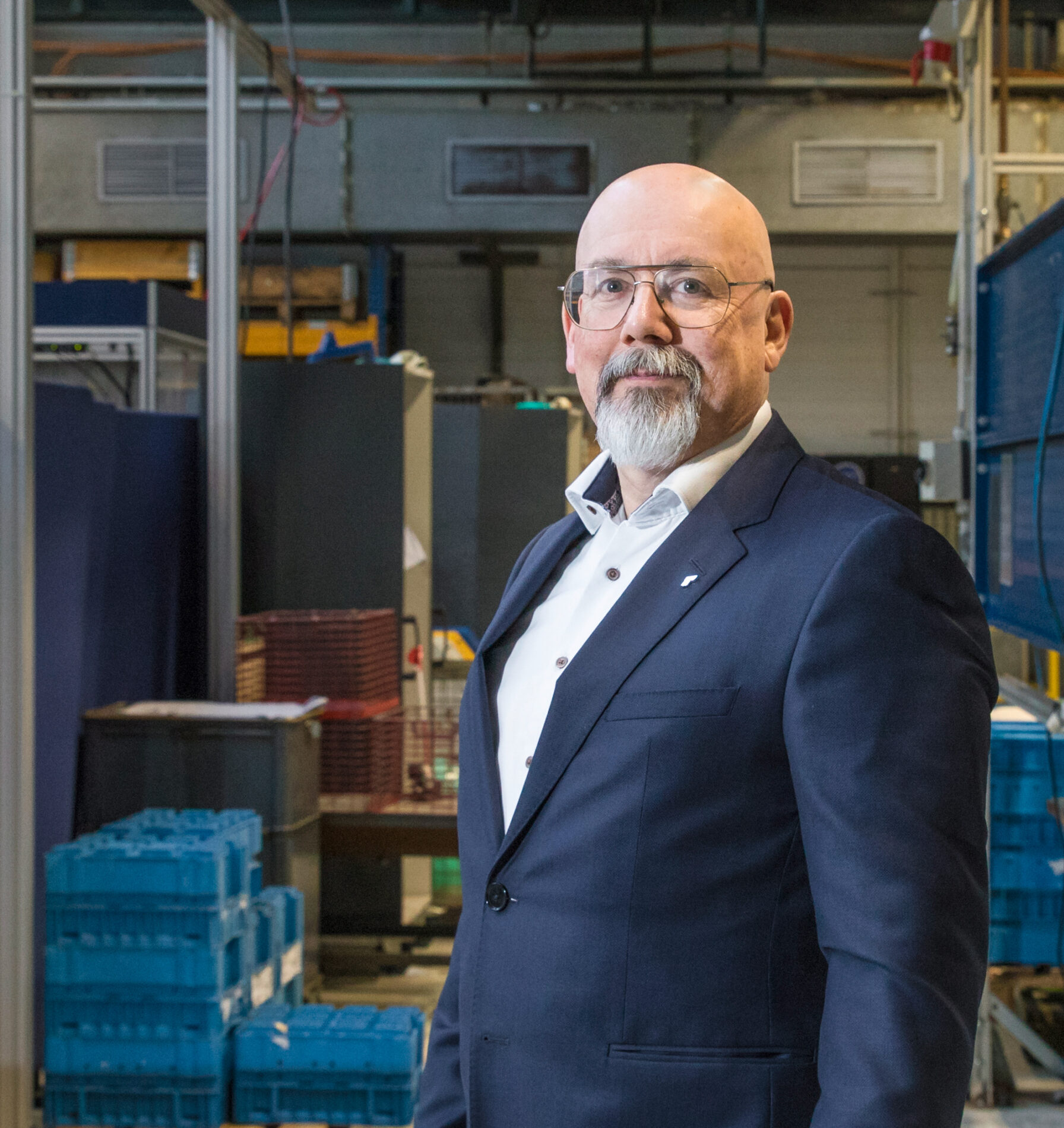
Dr Andreas Müller,
born in 1963, has been managing the Berlin production site since 2014. This site recently became part of Rheinmetall Waffe Munition following its transfer from the Rheinmetall subsidiary Pierburg. Prior to this, the electrical and production engineer with a PhD held various positions, including that of CEO of Pierburg in Ústí nad Labem in the Czech Republic.
Everything turned inside out
Andreas Müller has been with Pierburg, or rather Rheinmetall, since 1999, and has been managing the Berlin plant since 2014. The electrical and production engineer with a PhD, whom many colleagues simply call “Doc Müller”, emphasises that the conversion of the site to military production is a “real stroke of luck for the Berlin plant”. This applies to both the nearly 300 employees who will all stay on board and to Müller himself. Even though almost nothing will remain the same in the course of the reorganisation.
A tour of the production halls shortly before the turn of the year 2025/26 provided insight into what this process involves. The conversion is carried out during ongoing operation. The old production facilities are still being used to fulfil remaining orders for the automotive sector and to support sister companies, such as the one in Szeged, Hungary. Next door, a large factory hall has been completely cleared and fitted with a new floor at great expense. Machines for manufacturing projectile bodies stand, still fully packed, in the cleared areas, waiting to be put into operation.
“We’re already starting production of warheads for loitering munitions”, explains the “Doc”. These are intended for use in both the loitering munition from Rheinmetall Electronics (FV-014) and UVision (HERO) and in other systems. However, there are still a few temporary solutions in place, and some of the work can only be completed at a later date. “It’s like building a house,” says Müller. “You move in even if the attic hasn’t been painted yet.”
Supplier for Unterlüß
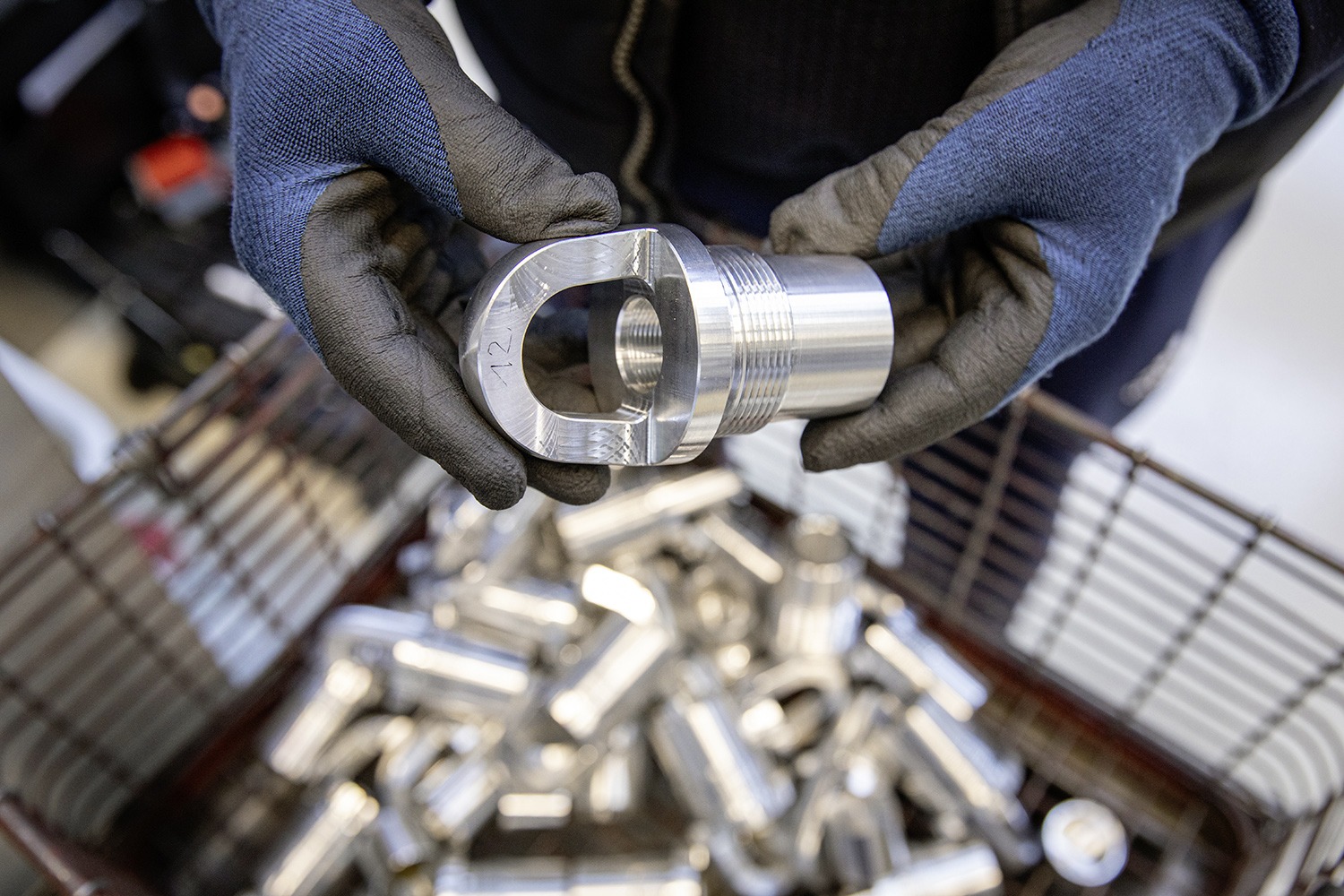
From 2027 onwards, Rheinmetall plans to manufacture up to 1.1million artillery shells per year. The Berlin plant will produce around 120,000 of the required shell bodies. These robust steel bodies will later be used for both live and training artillery ammunition. In addition to these, the Berlin plant supplies all the small mechanical parts required for the projectiles. Other types of ammunition are also manufactured there, including individual components, though no explosives. The customer for all of these products is the new Rheinmetall plant in Unterlüß, Lower Saxony, which began operating in August 2025 as Europe’s largest factory for large-calibre ammunition.
The plant manager believes that 2026 as the transitional year will be even be more challenging. “After that, we’ll be in calmer waters.” In the future, Rheinmetall will produce about 50 different series components in Berlin. Currently, this includes artillery shell bodies and associated small parts, as well as multipurpose shell bodies and components for loitering munitions. This represents a significant reduction in logistical complexity compared to the automotive era. “Back then, a single production line sometimes covered over 25 different products for various customers,” recalls Müller.
Attention to every detail
The plant manager’s office is covered in charts containing tables and timetables. When will the factory floor be ready? When can the old production lines be dismantled and replaced with the new ones? When can the hardening furnace and the new machines be commissioned? He and his team must keep track of every detail. Andreas Müller is no stranger to challenges like these. In 2004, he helped set up the Pierburg plant in Ústí nad Labem in the Czech Republic. Nevertheless, the transformation of the Berlin site is far from routine for him. “It’s not every day that a company decides, ‘Okay, we’re going to do something completely different now.’”
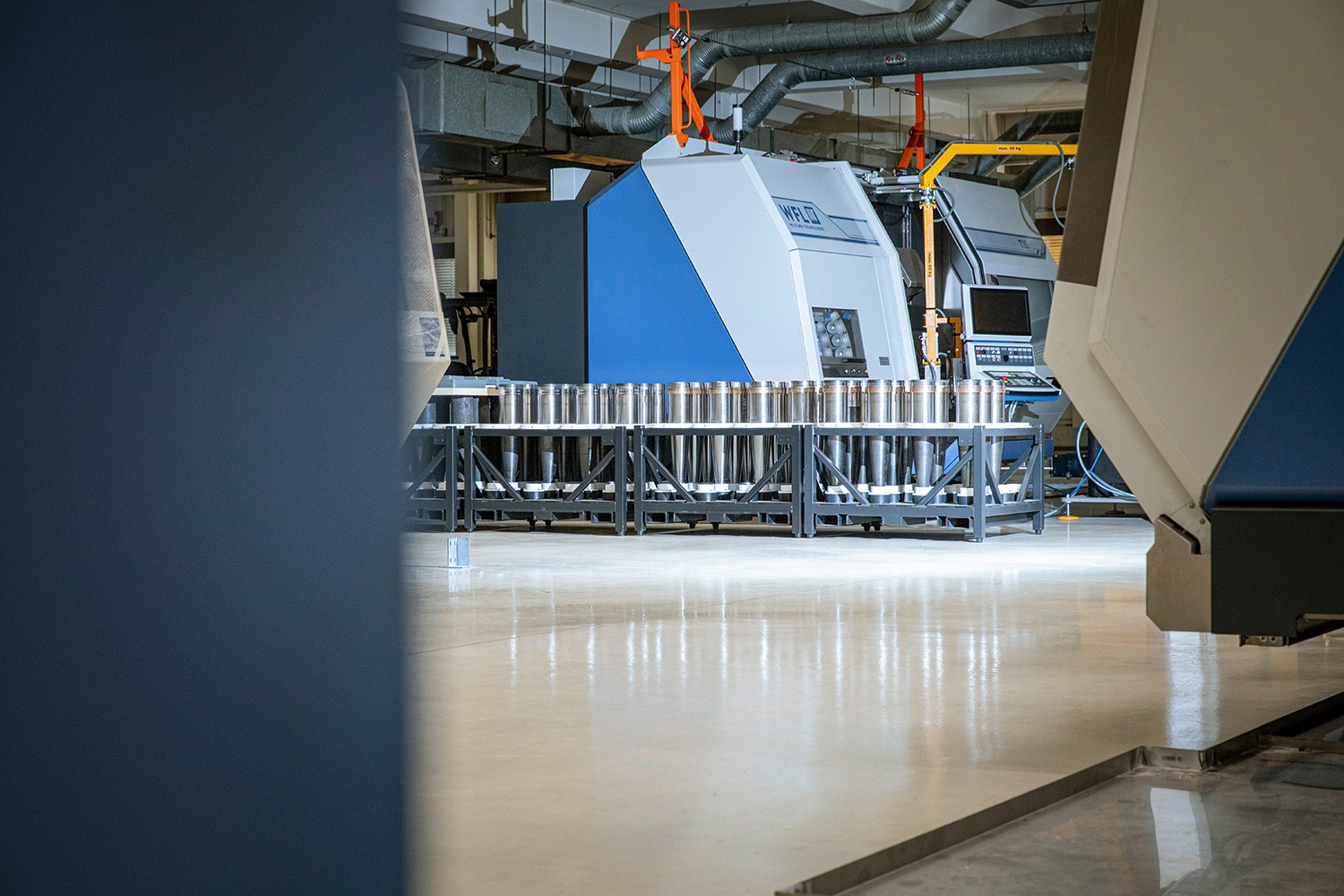
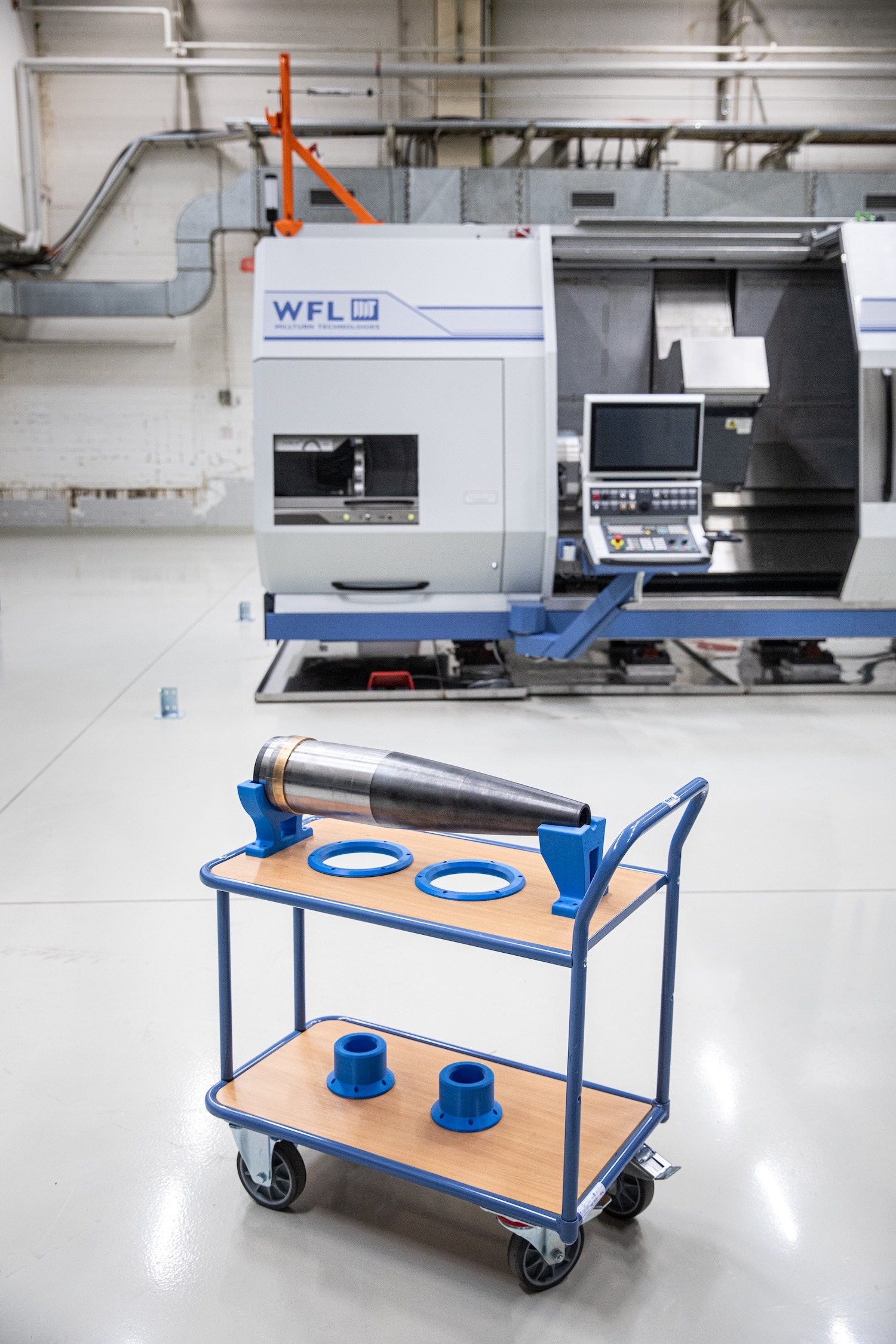
A renovation with challenges
And that’s not all. Modernising an old facility is often more complicated than building a new one. “Renovating the hall floor, for example, takes a lot of time,” explains Müller. “First, we have to remove the existing 4,000-square-metre surface before we can lay the new screed. The new floor must then meet certain groundwater protection requirements.”
Particularly when demolishing the floor, problems can arise that have remained hidden for decades. The site on which the plant in Berlin stands has been used for industrial purposes since 1883. “Wherever the construction workers break ground, there are surprises,” says the plant manager. “A pipeline is lifted, and suddenly they discover old Eternit, meaning asbestos, which requires special disposal. That doesn’t happen with a new building.” To ensure that they are not building on contaminated soil, Andreas Müller is taking soil samples at all relevant locations.
Retraining for new tasks
The complete reorientation of production also brings new tasks for the production staff. Rheinmetall is investing not only in machinery but also in a comprehensive training programme. “This retraining is particularly challenging for employees who have previously worked on highly complex machines on the assembly line,” explains Andreas Müller. “In future, these skilled workers will primarily be deployed in the equally demanding field of lathe machining.” There are also fundamental differences in tool setting compared to previous workflows. Training courses will take place in both Berlin and Unterlüß, as well as online. “For those colleagues who were already working in lathe machining before the restructuring, little will really change.”
The “Mini-Factory” stays
Despite the fundamental transformation of the plant, one thing that remains unchanged is the mini-factory. This agile working model has already proven its worth during the Pierburg era. Rather than rigid department settings, specialists from production, logistics, and quality assurance work together across divisions. “The teams decide for themselves how to prioritise incoming work orders and issues that arise on a daily basis,” explains Müller. “We only specify the production goals and the how – production processes, material logging, and quality standards.” From the plant manager’s perspective, this extensive freedom of decision-making not only makes the work more efficient, but also more attractive. “In everyday business, colleagues act independently within the framework of established processes. That’s motivating.”
Times change
Rheinmetall Waffe Munition is located right in the heart of the German capital. Even though nothing which is manufactured in Berlin is subject to the War Weapons Control Act (see “Weapons, yes – but safely!”) the site’s reorientation is sparking heated discussions. The security situation in Europe has changed, as has the public perception of the defence industry. This rethinking is also evident among the workforce. All 300 employees decided to stay. In a very short amount of time.
“In a way, the whole plant has taken this step together,” says “Doc Müller” with pride. “The team is fully motivated, as we are literally realising everything at once.” He adds thoughtfully: “As a supplier to the struggling automotive industry, a site like ours would be unprofitable in the future.” At the same time, he emphasises that for the people here, it is about more than just a secure job: “We are contributing to our own security,” says Andreas Müller. This is important to many. There is also the fact that with the plant, the industrial tradition in Gesundbrunnen lives on. Since the 19th century, this area of what is now Berlin’s Mitte district has been a centre of production – and that is certainly not going to change any time soon.

Click here to receive push notifications. By giving your consent, you will receive regular updates about new articles on the Dimensions website. This notification service can be cancelled at any time in your browser settings or your mobile device settings. Your consent expressly also covers data transfers to third countries. Further information can be found in our privacy policy under Section 5.