From cars to artillery
8. July 2026

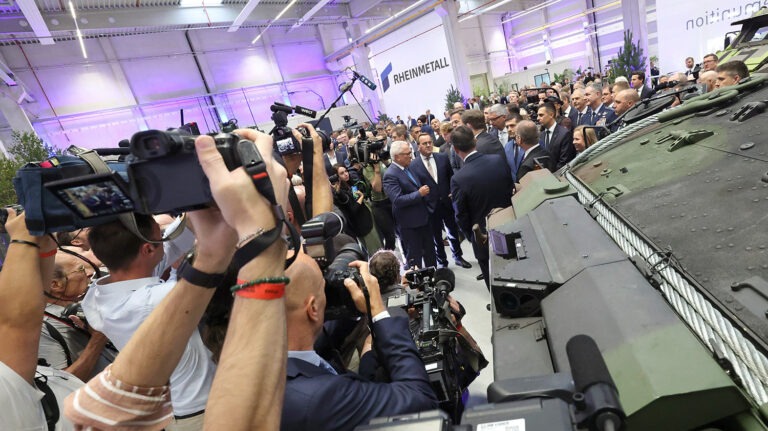
For a long time, the turning point in security policy drove defence stocks from one record high to the next. Euphoria has been followed by consolidation. Now defence companies have to profitably meet their ambitious growth targets. At Rheinmetall, the practical test is in full swing.

Richard Schramm
worked as an equity stock analyst for industrial stocks (including Rheinmetall) in the investment research department of a major international bank for over three decades.
The political decisions made by Western European countries, particularly by Germany, regarding their military capabilities after the collapse of the Soviet Union and the Warsaw Pact have proved to be seriously wrong. This was painfully demonstrated by Russia’s attack on Ukraine on 24 February 2022 – the consequence being a radical U-turn in Western defence policy.
As usual, investors reacted quickly to this paradigm shift. While the defence industry had previously led a shadowy existence on the stock market due to its poor growth prospects, it soon became one of the most popular investment options. The industry is now also viewed more favourably in terms of sustainability and ESG (environmental, social, and governance). This has triggered a global run on defence industry shares, pushing their prices and valuations to unprecedented heights.
Correction after soaring high
But even in the stock market, constant growth has its limits. At some point, even the most optimistic expectations are priced in. It seems that this point has now been reached. Almost all shares in the sector have lost value since their peak – in some cases quite significantly.
here is no doubt that the defence industry’s high growth expectations are well-founded. Europe’s NATO member states have significant operational capability gaps. At the same time, there is a broad political consensus on the need to substantially increase defence spending. NATO has almost doubled its target for member states, setting it at 3.5 per cent of gross domestic product by 2035. In addition, a further 1.5 per cent is allocated for relevant infrastructure. The German federal government intends to reach the 3.5 per cent target by 2029 – a goal that appears realistic, given the €500 billion special fund that has been agreed. Numerous countries outside of Europe are also planning increases. The potential demand for the industry has multiplied.
Now it’s time to deliver
Given the critical security situation, politicians and military leaders are currently demanding everything from their defence technology suppliers at once, and immediately. The pressure on defence companies in terms of order volumes and delivery deadlines is enormous and will not change in the coming years. The significant increase in order volumes confirms this: for example, Rheinmetall expects to have an order backlog of approximately €135 billion by the end of 2026, representing ten times its projected annual turnover.
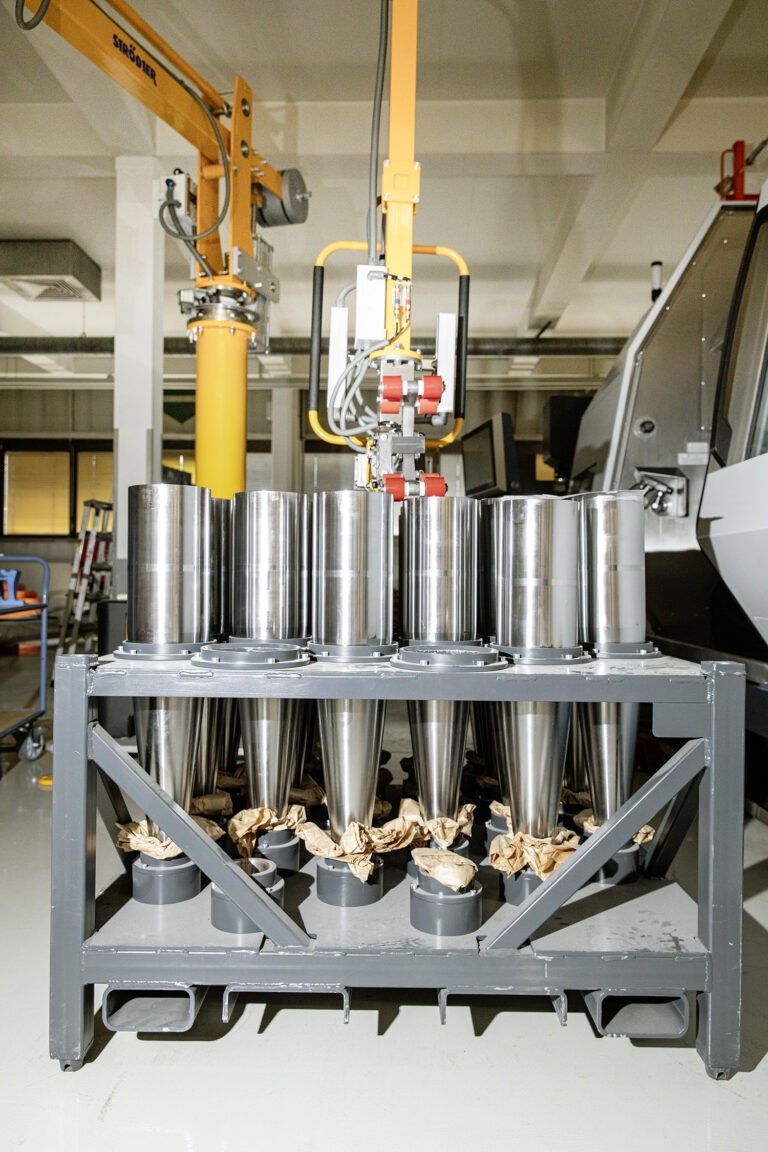
The top priority is therefore to increase capacity by adding production lines, improving efficiency and introducing more automation. Accordingly, companies are pushing ahead with a whole series of investment projects at their domestic and foreign sites. Rheinmetall is particularly active in this area, not least through joint ventures, investments, and acquisitions. These open up new markets for the corporation, such as for navies and satellites, as well as providing important expertise in digitalization.
Focus on profitability
In the coming years, it will be equally important to ensure that growth in volume is profitable. Investors will pay particular attention to this aspect. They expect revenue growth to correlate with higher profitability. Realising economies of scale and preventing margin pressure, even if only temporarily, through large investments or acquisitions is therefore the second major challenge for defence companies. This is the only way they can justify their current high valuations and open up opportunities for further price gains. With its ambitious yet well-founded growth targets, Rheinmetall is addressing these challenges. By 2030, the Düsseldorf-based corporation aims to increase its revenue fivefold to around €50 billion compared to 2024, with an EBIT margin of over 20 per cent.
Further information and key figures on the Rheinmetall share can be found on our corporate website under Investor Relations.

Click here to receive push notifications. By giving your consent, you will receive regular updates about new articles on the Dimensions website. This notification service can be cancelled at any time in your browser settings or your mobile device settings. Your consent expressly also covers data transfers to third countries. Further information can be found in our privacy policy under Section 5.