Mobile network to detect drones
10. August 2026
2. July 2026
Rheinmetall’s Firepower project is a response to the urgent demand for ammunition in Germany and across Europe. The technology group is investing heavily in expanding its sites, including its powder production facilities. This marks the beginning of an unprecedented transformation for Rheinmetall’s subsidiary Nitrochemie.
Project Firepower
From 2030 onwards, Rheinmetall aims at producing 20,000 tonnes of propellant powder each year. For Nitrochemie, one of the Group’s major propellant powder producers, this means:

An increase in staff numbers: The Aschau site is set to grow from 700 to around 1,200 employees and the Wimmis site from 250 to 300.

Cross-border cooperation between Rheinmetall Nitrochemie sites in Wimmis (Switzerland) and Aschau am Inn (Germany), as well as with Rheinmetall Expal Munitions in Burgos (Spain).

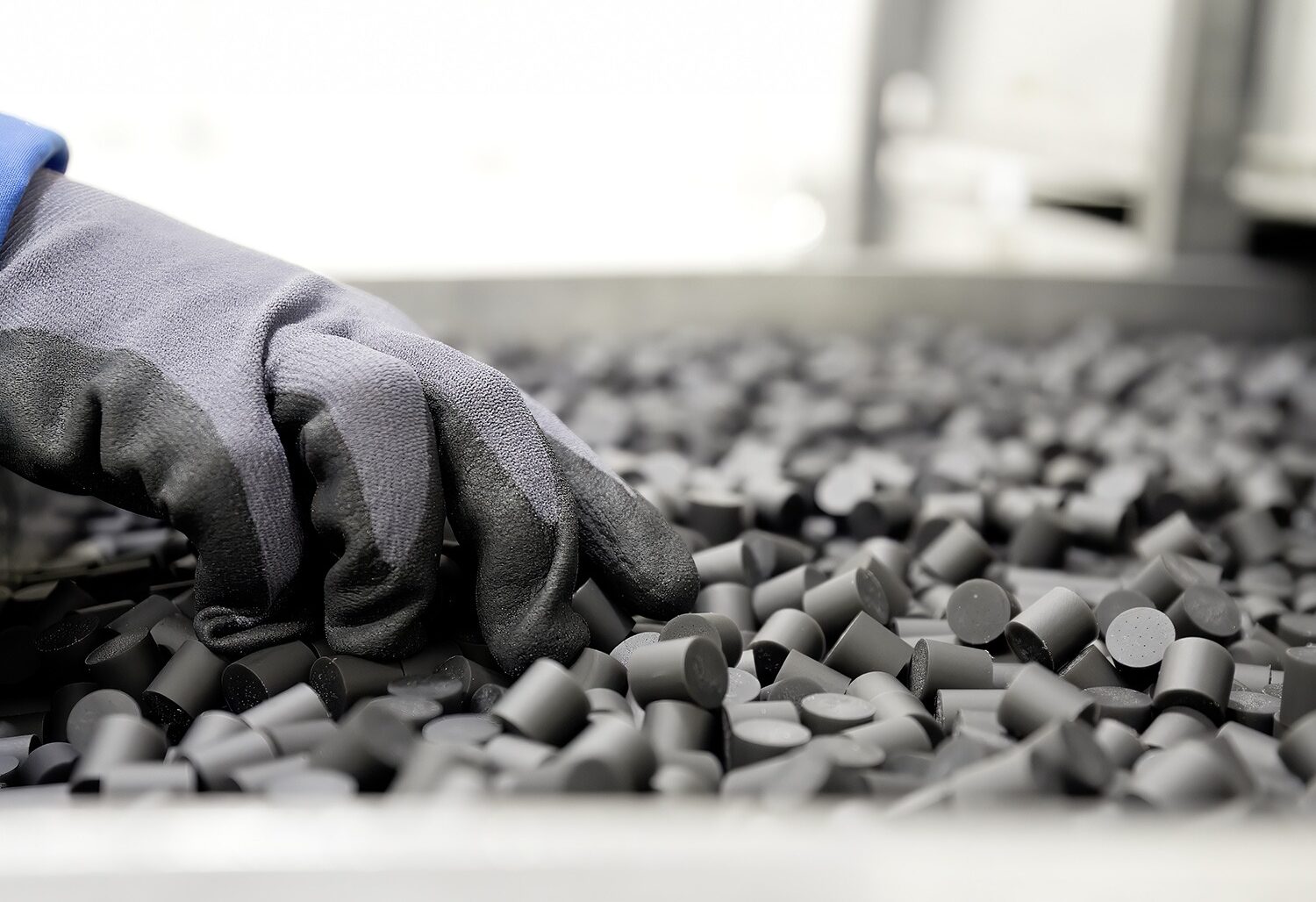
Changes to the production process: In future, the powder will largely be pressed from granules rather than rolled in order to increase output.

Expansion of infrastructure: New buildings will be constructed or acquired, significantly expanding the company’s premises in Aschau.
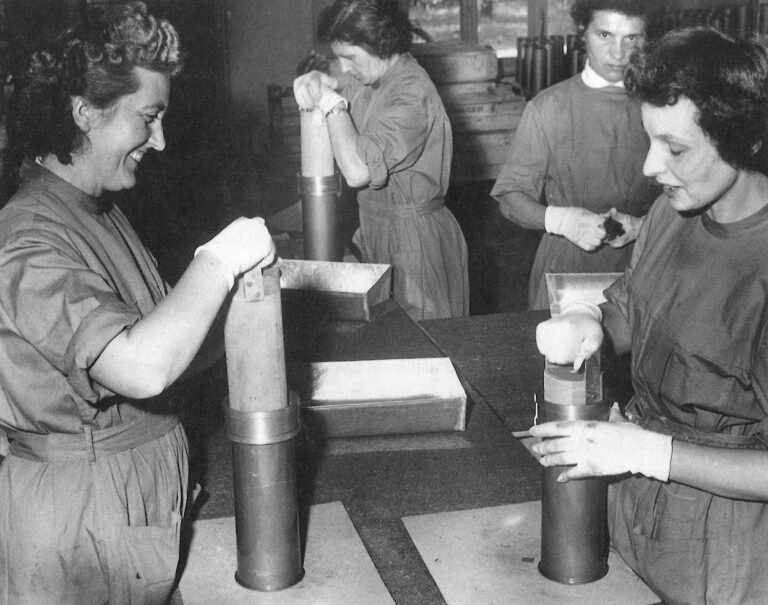
Only a few months have passed since Rheinmetall subsidiary Nitrochemie in Aschau am Inn completed its latest major expansion. Located in the Bavarian Alpine foothills, the company primarily produces propellant powder. Between 2023 and now, the workforce has grown by 20 per cent to over 700 employees. Work is carried out in shifts around the clock. The plant now produces 1,700 tonnes of powder and around 200,000 propellant modules per year. “The capacity expansion has been a resounding success,” says Pascal Schreyer, Nitrochemie’s CEO. Besides its location in Aschau, the company is also present in Wimmis, Switzerland. “This gives us a real boost. It will help us to tackle the challenges ahead of us.”
For there is much more happening at Nitrochemie. Over the next 24 months, production of powder and propellant charge modules is set to more than double. “Our goal is to produce an additional 2,500 tonnes of powder and 550,000 modules in Aschau,” says Oliver Becker, Aschau’s Senior Vice President of Operations. In addition, Rheinmetall’s sites in Wimmis, and in Burgos, Spain, are involved in the Firepower project. To achieve these ambitious goals, the company plans to recruit around 500 new employees in Aschau and around 50 in Wimmis.
Ammunition Initiative
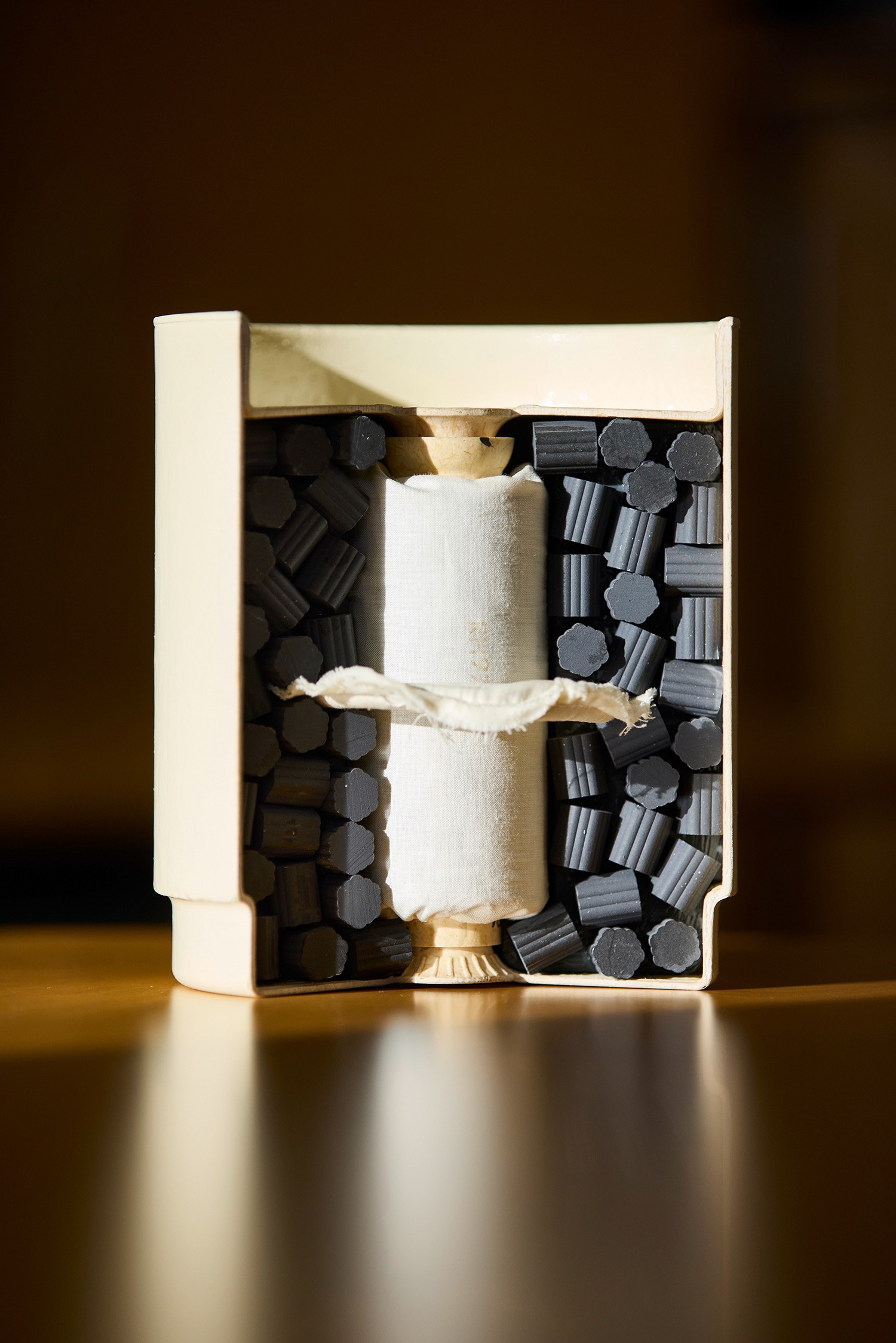
Day by day, it is becoming increasingly clear just how significant the defence backlog is in Germany and the EU. Countries must be robust enough to withstand the upheavals and challenges that influence global events. With Project Firepower, Rheinmetall is responding to the urgent need for ammunition. A key component is the propellant charge, often referred to as gunpowder. Upon ignition, it propels the projectile out of the gun barrel at high speed, giving the projectile the energy it needs to reach its target. “Unlike explosives, there is no explosion when the propellant charge is fired,” explains Becker, “but rather a sudden, controlled combustion of the powder in the barrel.” The projectile itself can ultimately take effect at the target through its kinetic energy. He continues: “Based on the type, this may also be aided by an explosive charge.”
Demand for ammunition within NATO, the EU, and the Bundeswehr is enormous – and it’s not just about Ukraine anymore. Rheinmetall is investing heavily in its production facilities by building new ammunition plants, such as the one in Unterlüß, and expanding existing sites, such as Nitrochemie. The Düsseldorf-based technology group supplies the “full shot” from a single source, covering everything from the projectile and fuse to the primer, propellant charge, and payload. “None of these components shall be a bottleneck,” says Schreyer. “This is particularly important when it comes to propellant, as there are only a few manufacturers worldwide. Our self-sufficiency is therefore crucial.”
New processes, increased output
Capacity expansions are almost always accompanied by far-reaching changes in production processes. For instance, Wimmis has primarily supplied nitrocellulose pulp to Aschau, where it is manually processed into powder in several stages of production. “In future, we will receive pre-processed granules from Wimmis,” says Becker, explaining the changes. “Instead of rolling the raw material as we have done until now, we will soon be producing it using the granulate pressing process, thereby significantly increasing output once again.” Dozens of further process changes and a significantly higher degree of automation are being implemented. At the same time, the Burgos site needs to be integrated into the project workflow. Highly complex processes must be modified and re-coordinated as quickly as possible. “We now have extensive capabilities and expertise in project management and plant installation,” says Schreyer. “We are confident we can do this.” The initial test results for products manufactured using the new process route provide additional reasons for optimism. “We have tested a small production batch on a ballistic system belonging to the Bundeswehr in Unterlüß,” says Schreyer. “The results are very good.”
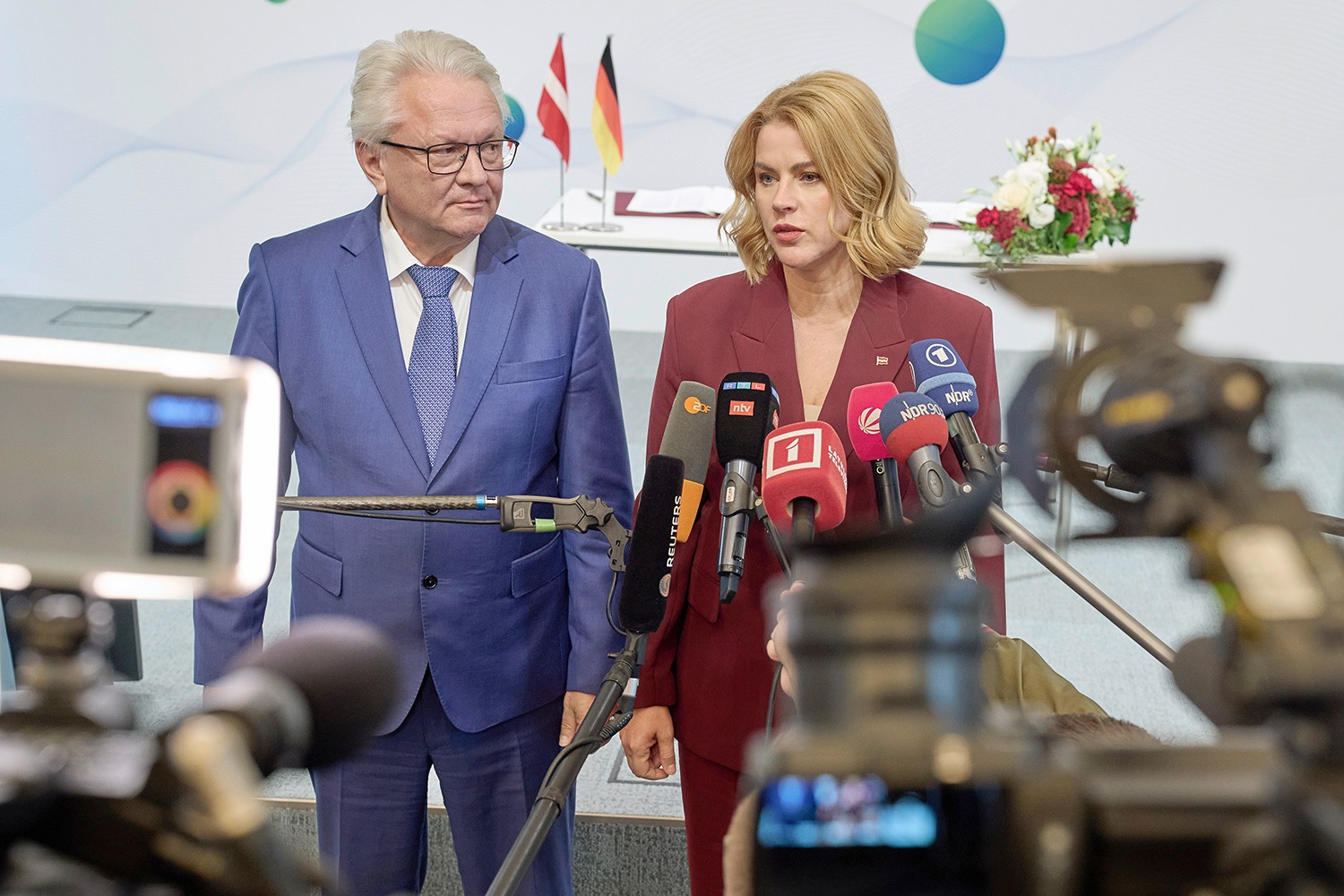
Hamburg, September 2025: Prime Minister Evika Silina and Rheinmetall CEO Armin Papperger finalise plans to build an ammunition factory in Latvia. Expanding production capacity in the Baltic States and other European countries requires a secure supply of raw materials such as propellant powder.
450 million for increased firepower
The scale of the investment underlines the importance of the Firepower project for Nitrochemie. “We are investing around €250 million in Aschau, around €100 million in Switzerland, and roughly €100 million in Spain,” says Schreyer. In this way, the subsidiary is helping the parent company to achieve its ambitious goal of producing 20,000 tonnes of propellant powder annually by 2030. This will be used to manufacture propellants for around 1.1 million rounds of artillery ammunition, 150,000 rounds of tank ammunition, and 3.2 million rounds of medium-calibre ammunition, amongst other things.
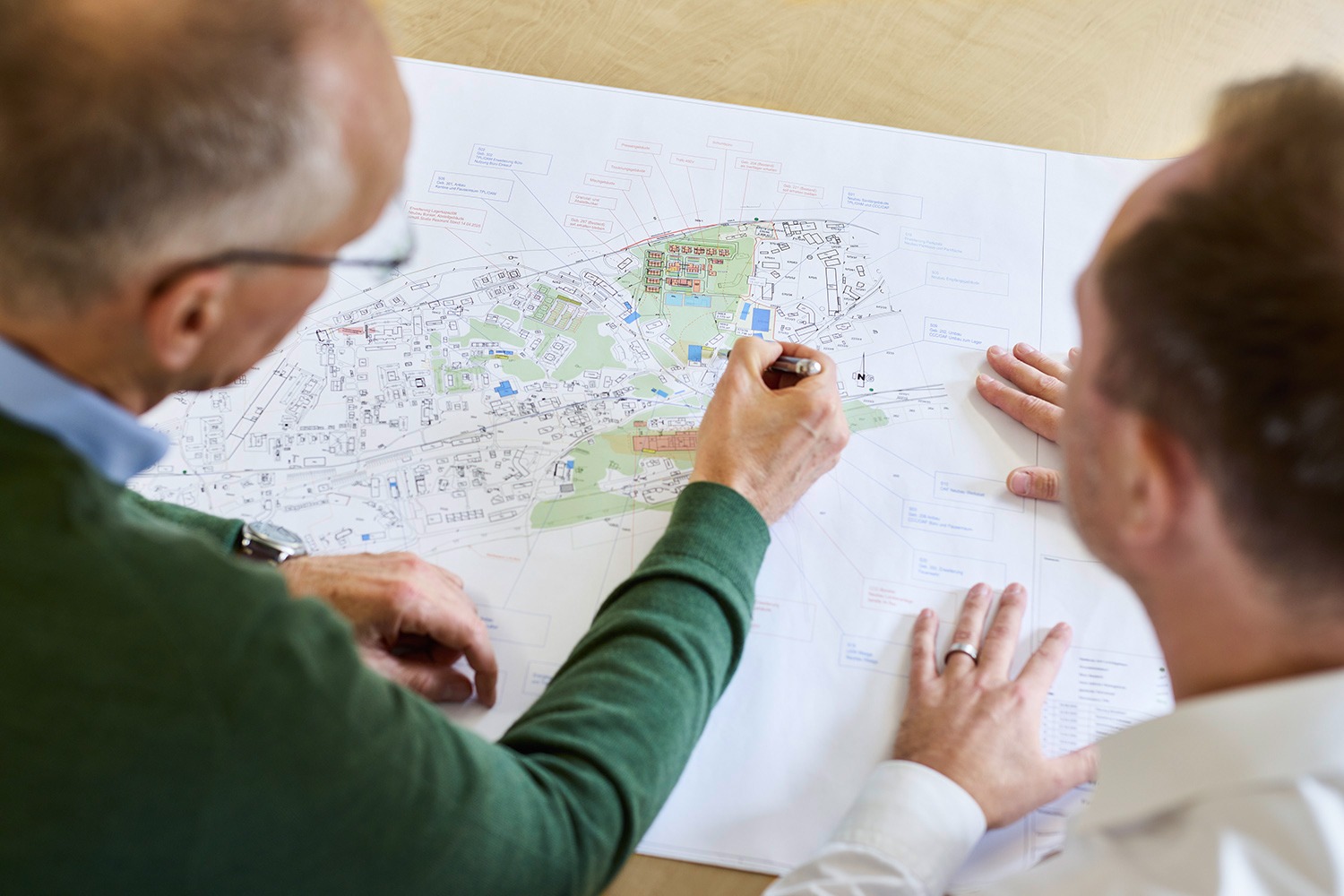
A tour of the Aschau site reveals the scale of the changes taking place there. The capacity expansion requires space, which Nitrochemie is creating by purchasing land in the immediate vicinity and through land clearance. The company fully offsets the latter through reforestation elsewhere. “All these measures are being carried out in strict compliance with construction regulations, environmental protection laws, and safety regulations,” emphasises Becker.
The challenge of generational change
The planned growth in staff numbers is ambitious in itself. However, the site faces an additional challenge in the form of a generational change, as many industrial companies are currently experiencing: the baby boomers are retiring. “We need to replace them, not just in terms of numbers, but also in terms of the quality of their expertise,” emphasises CEO Pascal Schreyer. In recent years, his company has taken significant steps to ensure that this transition is as smooth as possible. “We are currently recruiting skilled workers who are helping to set up the new facilities, which they will operate later,” reports Becker. The roles are varied, ranging from shift workers to production managers.
The forward-looking HR strategy is paying off today. Two years ago, Nitrochemie launched intensive recruitment campaigns as part of its capacity expansion. This experience is helping to attract qualified staff. On top of that, two further factors are working positively for Nitrochemie and its parent company, Rheinmetall. Firstly, the economy is faltering in other sectors, particularly the automotive industry. Many of the skilled workers made redundant in these sectors have precisely the skills in demand at Rheinmetall and Nitrochemie. At the same time, attitudes towards the defence industry have shifted. “The situation on the labour market has changed in our favour. Rheinmetall’s appeal as an employer brand has increased considerably,” says Becker. “We are now in the public eye, and the polarising element has largely disappeared.”
These days, job applicants are looking for a sense of purpose in their work, and they find it at Rheinmetall. “Many people say, ‘I want to make a difference. I want for those who are protecting us to have the right equipment, whether in Ukraine or at NATO’s external borders’,” says Pascal Schreyer.
Keeping supply chains secure
Skilled workers are one thing. However, for Project Firepower to be successful, the supply of raw materials must also be secured. This is a major issue, and not just for Rheinmetall. The Group is thinking ahead here, too. “We are constantly evaluating our supply chain and making adjustments where necessary,” says Schreyer. The Nitrochemie CEO explains how this works in practice using a current example: “As part of our capacity expansion, we will be manufacturing an explosive in-house that we have previously bought externally.” A production facility for this purpose is already in the planning stage. Although these quantities are small, they are essential, according to Schreyer. Oliver Becker adds: “For other raw materials, we can rely on a large stock.” In some cases, Nitrochemie has stockpiled supplies for the next three years.
Remain competitive
One issue is clear: the high demand for ammunition and propellant powder is a direct result of ongoing geopolitical crises and conflicts. Like most people, the team at Nitrochemie yearns for peace. Nevertheless, the defence industry remains relevant. “By expanding our capacity, we are improving our production processes and are hence strengthening our competitiveness,” says Schreyer. “There will be times when we will have to stand more firmly in the face of international competition. We are seizing this opportunity to optimise our position in this respect.”
At Nitrochemie, it’s now time to tackle the job. Project Firepower requires new facilities, new processes, and additional staff to be implemented. The management team is approaching this task with optimism. “We have every confidence in the capabilities of our organisation and our workforce,” says Pascal Schreyer. “With this foundation, nothing can go wrong.”

Click here to receive push notifications. By giving your consent, you will receive regular updates about new articles on the Dimensions website. This notification service can be cancelled at any time in your browser settings or your mobile device settings. Your consent expressly also covers data transfers to third countries. Further information can be found in our privacy policy under Section 5.