From cars to artillery
8. July 2026
24. June 2026 - from Jan-Phillipp Weisswange
Espionage, drone flyovers, and fake news: Russia’s hybrid war against the West is intensifying. In the event of a NATO collective defence clause, the Bundeswehr must protect critical infrastructure and secure the routes of the “German hub” – a task primarily for the reserve component of the home defence and security forces.
Home defence and Territorial Reserve
The Bundeswehr’s home defence forces and Territorial Reserve form a key pillar of Germany’s comprehensive security readiness. The Territorial Reserve brings together the home defence forces grouped within the German Army, as well as the liaison organisation for civil–military cooperation (CIMIC), which is subordinate to the Bundeswehr Joint Force Command.
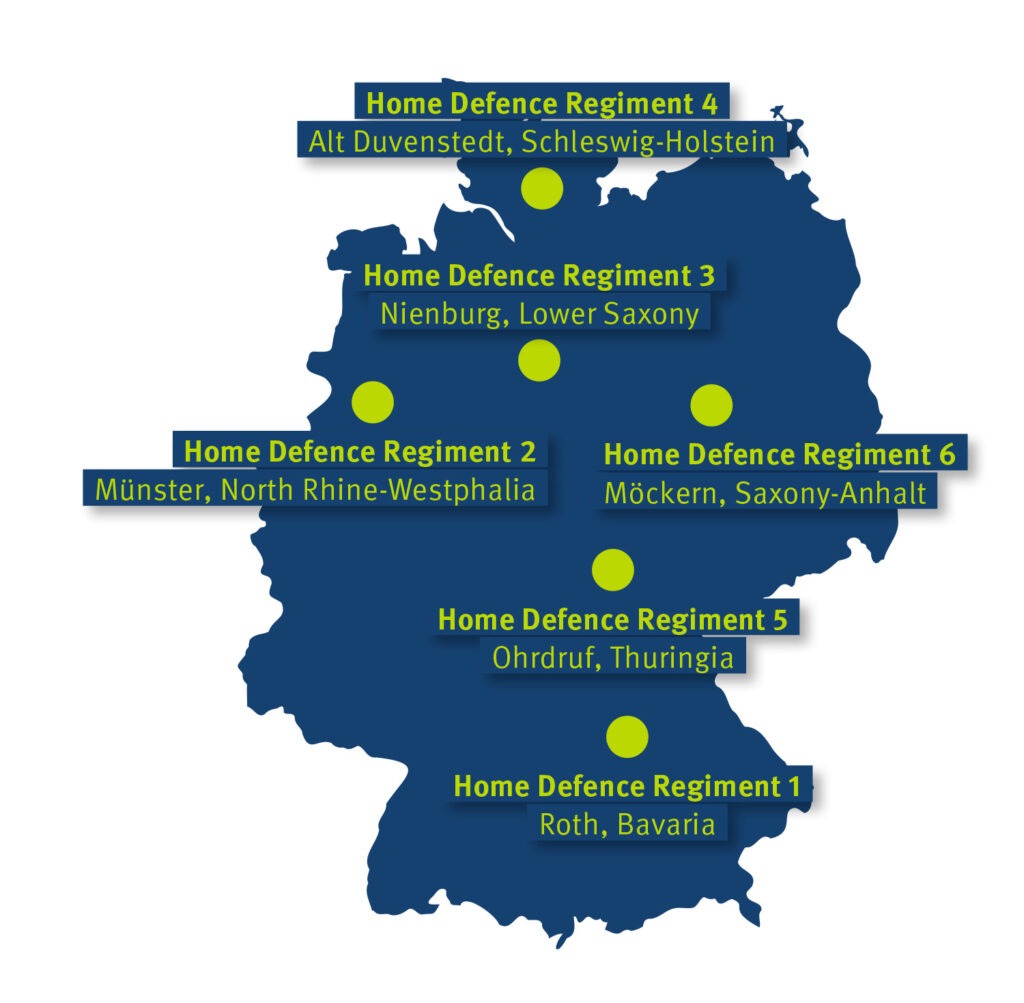
Stationed in Berlin, the Home Defence Division currently consists of six home defence regiments with a total of 60 companies at 42 locations:
The territorial CIMIC network is structured into 16 regional territorial commands, 34 region liaison detachments (BVK) at an administrative regional level, and 414 district liaison detachments (KVK) in the counties and independent cities of all federal states.
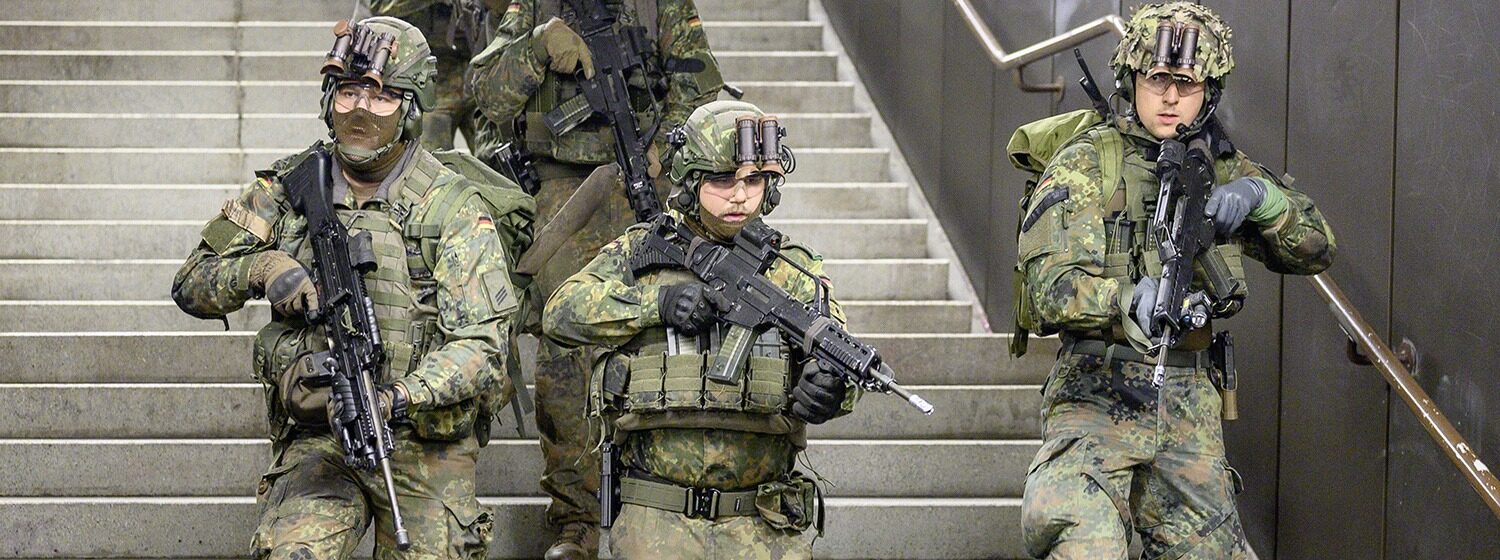
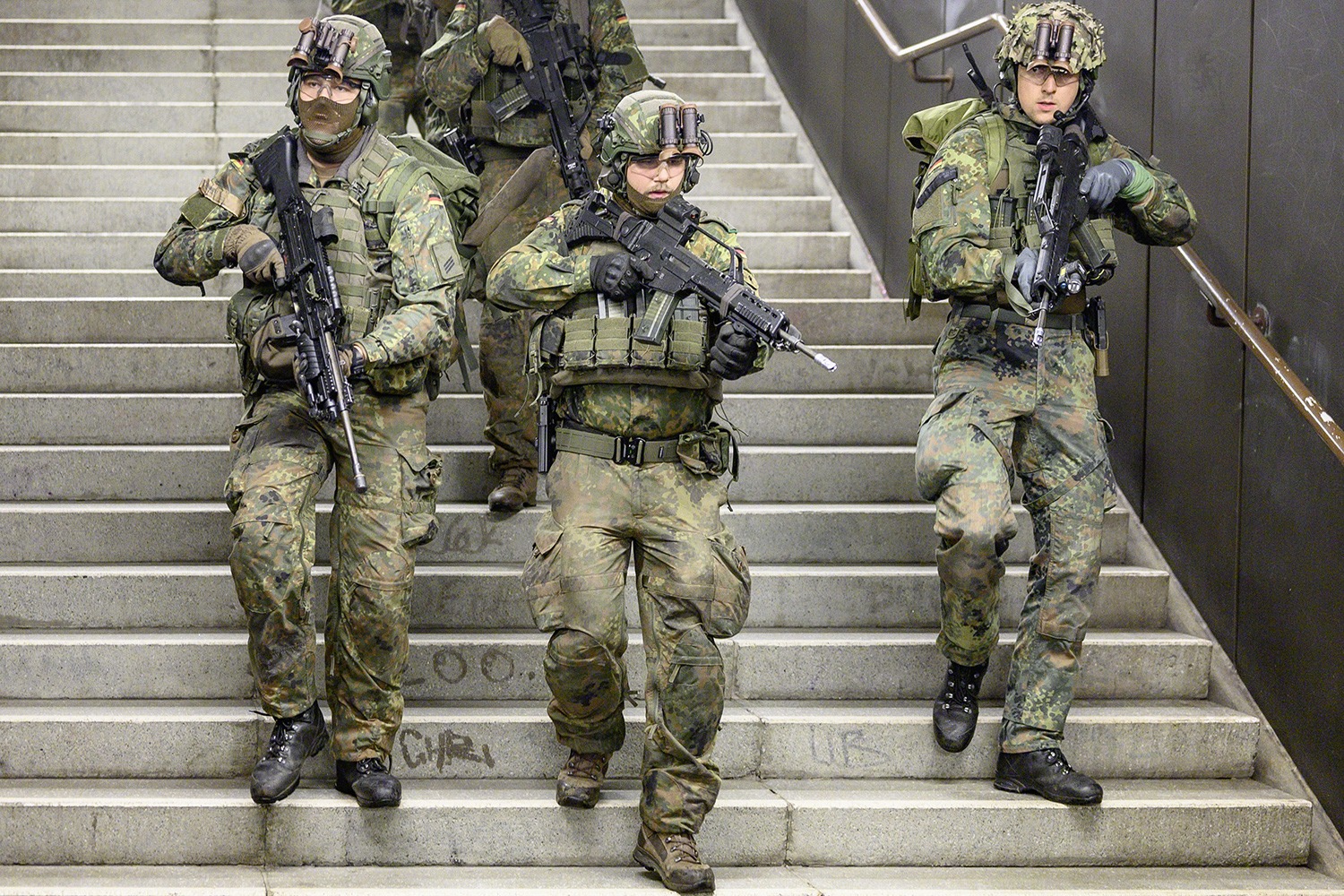
Consisting mainly of reserve component soldiers, the home defence and security forces protect what is essential in the event of defence: ports, airports, bridges, railway lines, energy infrastructure, and digital networks. Their second core task involves what is known as host nation support: they ensure the freedom of movement of German and allied forces, including the evacuation of wounded personnel and prisoners of war as well as damaged combat vehicles and other defective equipment. Drone defence and disaster relief complete their mission spectrum.
Back to the strategic reserve
In terms of its reserve forces, the Bundeswehr is thus returning to its former role. During the Cold War, alongside its reserve forces within the field army, it operated a territorial army consisting largely of reserve soldiers to protect rear areas. With the fall of the Berlin Wall and the subsequent collapse of the Soviet Union, national and alliance defence gradually lost their significance. Transformed into an “army of deployed operations”, the Bundeswehr required relatively few reserve personnel, who primarily filled vacancies in the active forces caused by deployments abroad. The old units of home defence and security within the army had outlived their purpose. From 2012 onwards, Regional Security and Support Forces were re-established within the Joint Support and Enabling Service, albeit with significantly fewer personnel. They complemented the Territorial Reserve, which consisted of liaison detachments to state governments and district and local authorities and primarily provided advice on civil protection. Russia’s attack on Ukraine in February 2022 marked the turning point: since then, national and alliance defence have once again been the Bundeswehr’s focus, and with it the ability to grow and sustain forces as the reserve’s true strategic role.
Emerging from the regional security and support forces, the home defence regiments were formed under the Joint Support and Enabling Service Headquarters, which has been disbanded in the meantime. Today, these regiments are once again under the command of the army. The Home Defence Division, established in April 2025, operates exclusively on German territory. Alongside long-serving reserve soldiers, it is currently also the home for many conscripts, who volunteer for between seven and 23 months of military service. The training companies of the home defence regiments provide basic military training over a six-month period for them. The guiding principle is that recruits must master everything they need to survive on the battlefield and in home defence. After completing their military service, they remain assigned to home defence as reserve duty personnel, contributing to the renaissance of the reserve.

Click here to receive push notifications. By giving your consent, you will receive regular updates about new articles on the Dimensions website. This notification service can be cancelled at any time in your browser settings or your mobile device settings. Your consent expressly also covers data transfers to third countries. Further information can be found in our privacy policy under Section 5.