Good question
1. July 2026
2. October 2026
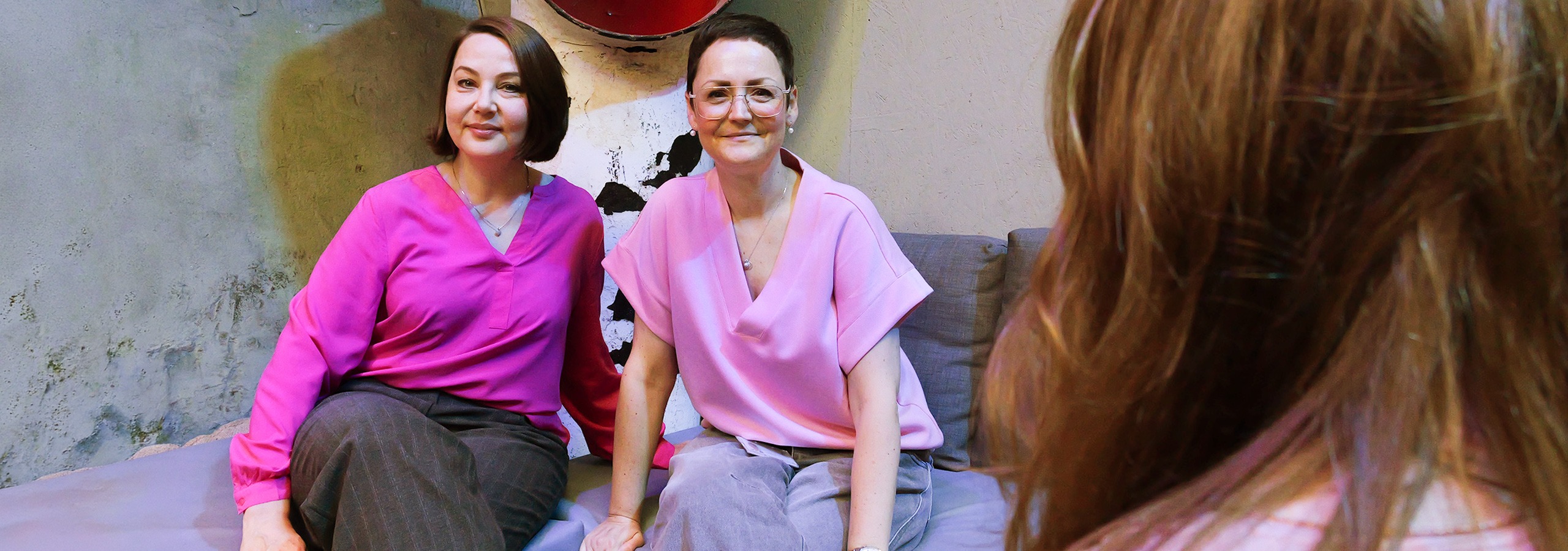
Around the world, the month of October is dedicated to breast cancer prevention. This year, Rheinmetall is officially participating in the international awareness campaign for the first time. Two employees, Eva-Maria Villnow and Julia Stump, share how their diagnoses changed their lives in an instant. This is a conversation about fear, strength and the beauty of scars.
Wear pink, share knowledge, save lives
Statistically speaking, one in eight women in Germany will develop breast cancer during their lifetime. If detected early, the chances of recovery are good. The international awareness month ‘Pinktober’ aims to raise public consciousness of breast cancer and the importance of screening. The campaign provides information on prevention, displays solidarity with those affected and draws attention to available services and treatments.
You have gone through surgery, chemotherapy and radiotherapy. Today, you are both cancer-free. The immediate physical strain is now a matter of the past. But how do you cope with the mental pressure and the pressing question: What is going on inside my body?
Julia Stump: It’s a question you can’t shake off. At some point, the physical hardships are behind you, your hair grows back and you look and feel normal again. But the uncertainty remains: what is actually happening inside my body right now? I won’t have that certainty for the rest of my life. But fundamentally, none of us ever does, even without having had cancer.
Eva-Maria Villnow: I could never have imagined the stages you go through. After the initial shock, survival mode kicks in. I had to accept that you find yourself in a completely new world, that you have to readjust and fight. At first, it was all about getting through the first year. After that, a kind of grieving process begins: coming to terms with the illness, the loss of control, and also accepting that trust in your own body doesn’t simply return once treatment ends. I’ve learnt to listen more closely to my body, without immediately interpreting every signal as a threat. No one can be grateful for an illness like this. And yet, I feel grateful for every new day. I now experience life differently, more consciously and with an even greater appreciation for what is there.
Gratitude is not necessarily a word that immediately comes into mind in connection with cancer.
Julia Stump: I agree with everything you’ve said. I think everyone knows that setbacks happen. You fall down, get back up, adjust your crown and carry on. But then you suddenly find that everything is out of hands and that you depend on doctors making the right decisions and that the treatment is taking effect. You realise how little control you often really have. This illness has really sharpened my focus on what’s important in life. I’m grateful for that, and for my Life 2.0.
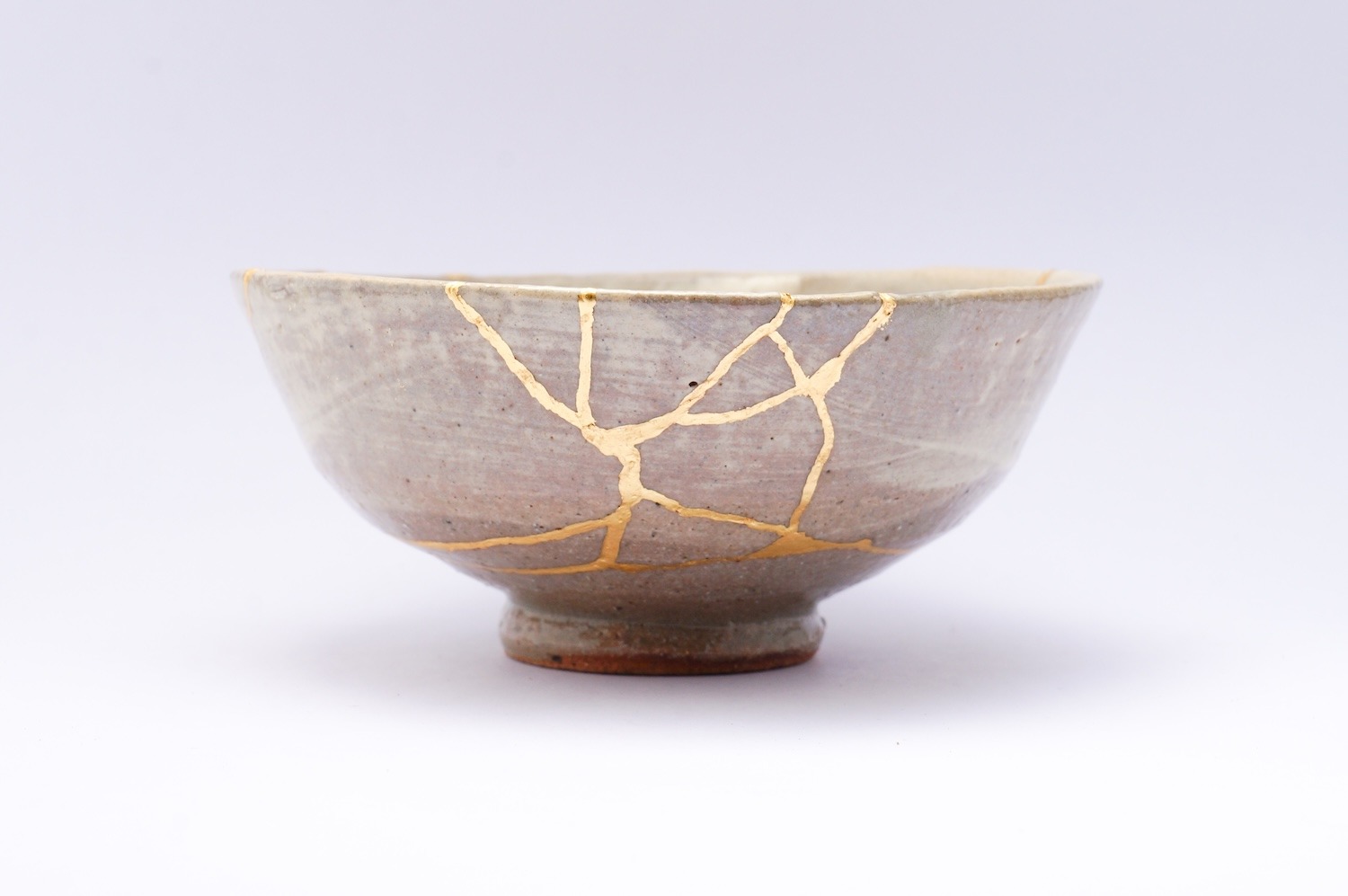
Scars of Gold
Don’t conceal cracks – gild them: the Japanese art of repair known as kintsugi mends broken ceramics with gold lacquer. For Eva-Maria Villnow and Julia Stump, this is a metaphor for life. The cracks are part of one’s own story. They are an expression of strength and weakness, and display the beauty of imperfection.
To what extent has the illness affected your view on life?
Eva-Maria Villnow: I try to take life as it comes. With everything that goes with it – including the cracks. In Japan, there is an art form called kintsugi. Rather than throwing away broken pottery, the individual pieces are put back together and the joints are beautifully highlighted in gold. The repair doesn’t undo the breakage, but it gives the broken piece new sense and a beauty all of its own. This is the attitude with which I look upon my life. My illness is part of my story. Although I wouldn’t call it a gift, it has left its mark and changed my outlook on life. I try not to fight against this imperfection, but to see the beauty and value in it too. This is especially true in areas where life hasn’t turned out the way I’d imagined.
Julia Stump: Our cracks and fractures are part of who we are, and they are allowed to be seen. The shock of the diagnosis ran deep, but my positive view on life was crucial in helping me getting through the treatment. My husband and my children were my greatest sources of both support and motivation.
Have you gained a different perspective on your working life?
Eva-Maria Villnow: Yes, I’m grateful to be part of a team whose members are there for one another in difficult times and support each other. This sense of connection means a great deal to me. I now have a clearer idea of what work means to me and how much I value having a sense of purpose. I want to make a difference and give something back – and where would it be better than in occupational health management?
How did your team react to the diagnosis? How did your supervisor react?
Julia Stump: Right from the start, I wanted to continue working, and that’s exactly what I managed to do. My supervisor and my colleagues were always there to support me. My work gave me great stability and structure, as well as a sense of purpose.
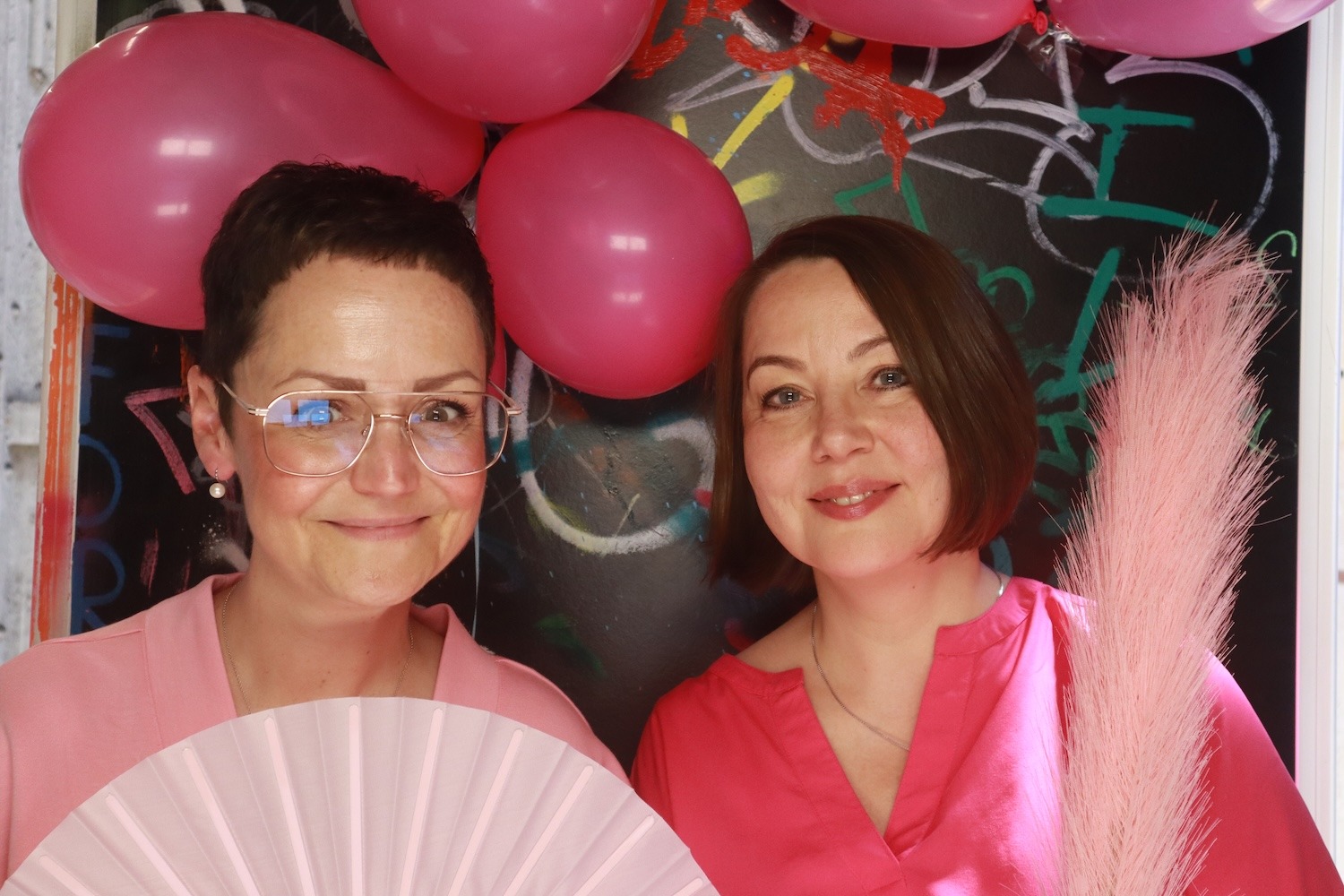
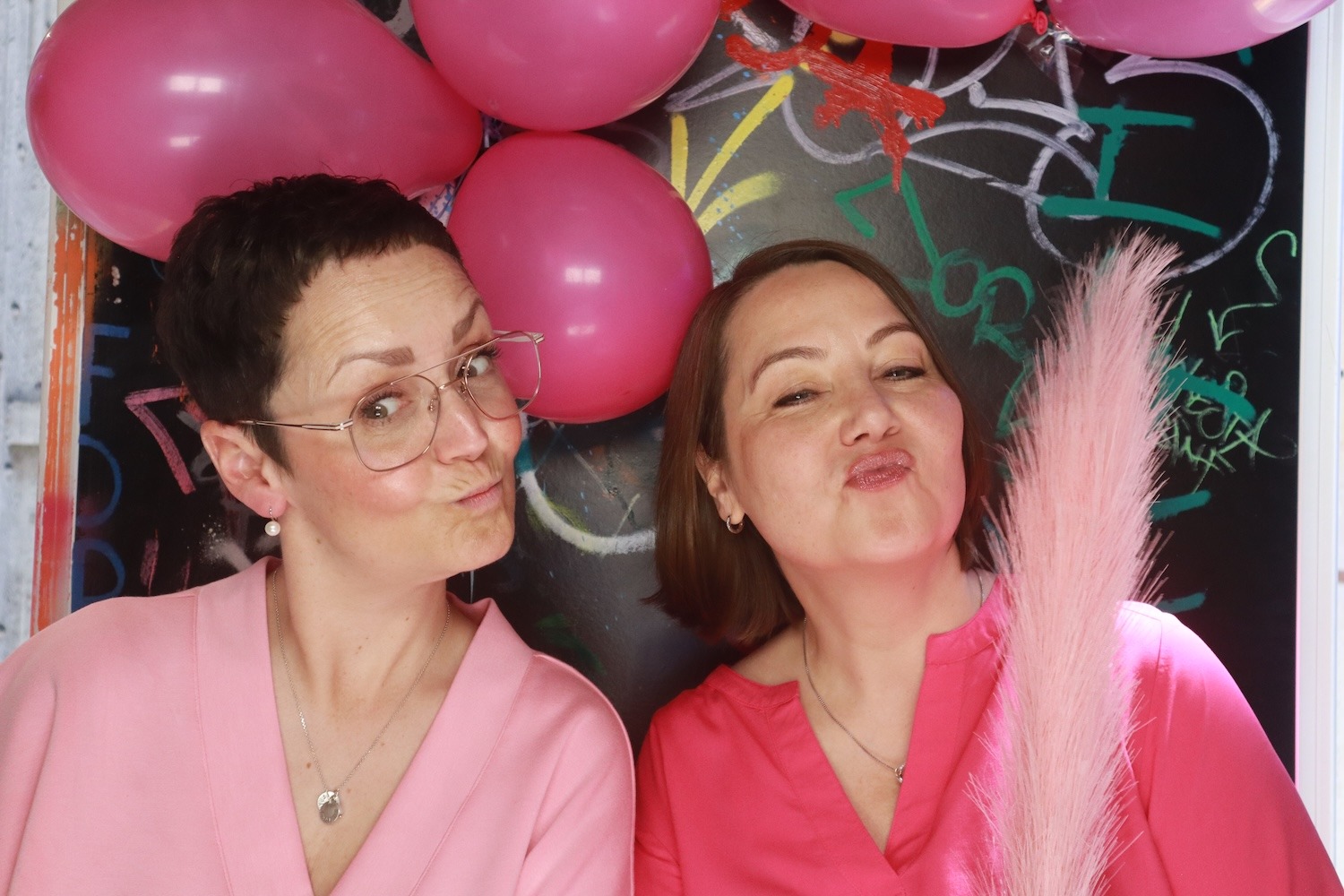
Did you have the impression that people were insecure of how to react? In your view, is breast cancer still associated with shame or discomfort about this issue?
Julia Stump: Yes, for many people the subject is still a taboo. Telling others about the illness triggers a lot of emotions. Never in my life have I brought so many people close to me to tears. For me, it wasn’t a taboo to talk about it; on the contrary, being open about it helped me a lot. Nevertheless, cancer is still associated with shame. I find that completely incomprehensible.
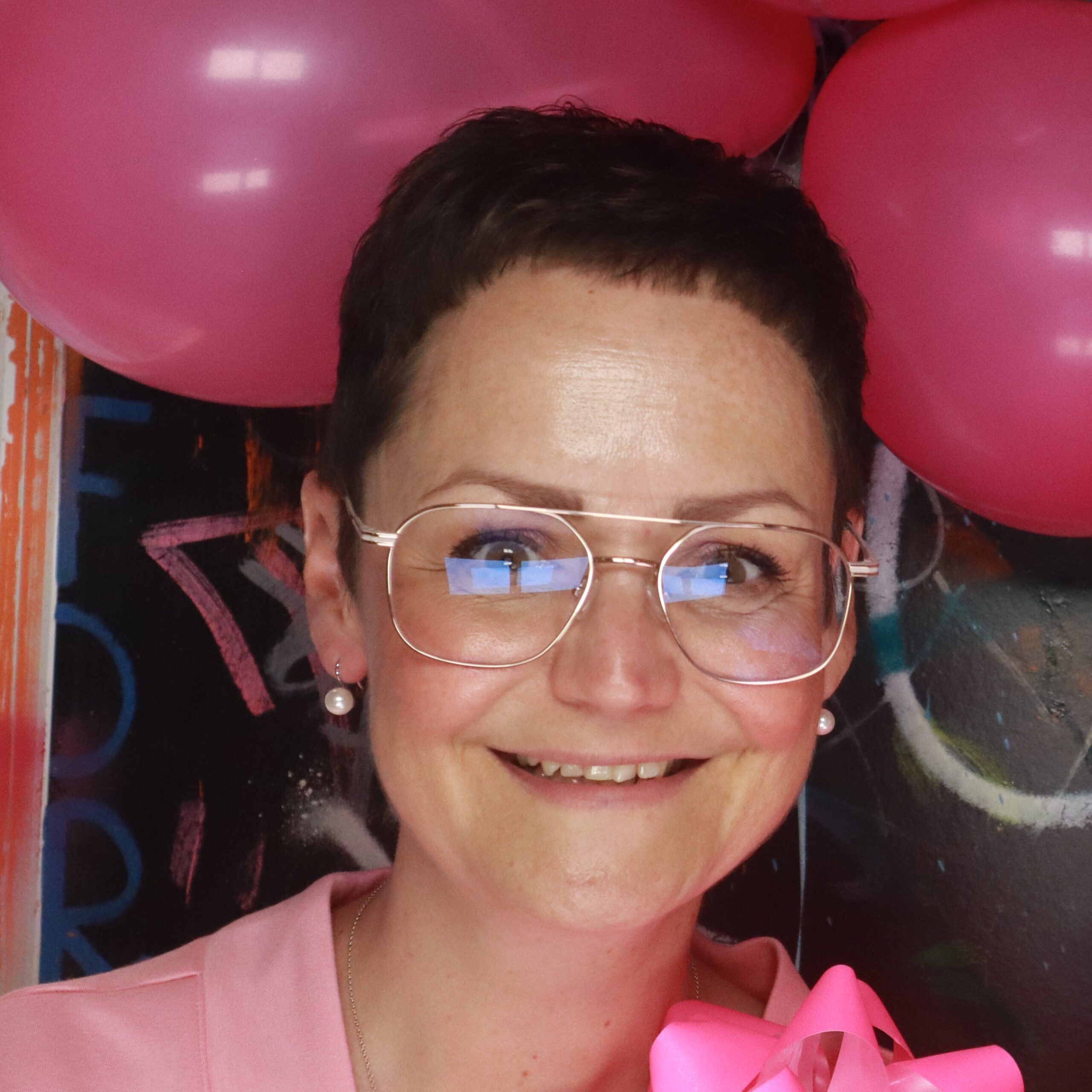
Julia Stump
aged 45, married, mother of two, and full of Cologne’s characteristic zest for life. When she was diagnosed in 2025, she had joined Rheinmetall’s sustainability team only a few months earlier. Following chemotherapy, surgery and radiotherapy, she is now cancer-free but must undergo regular follow-up examinations. Julia Stump looks upon the future with a positive attitude. She draws strength from her family and friends.
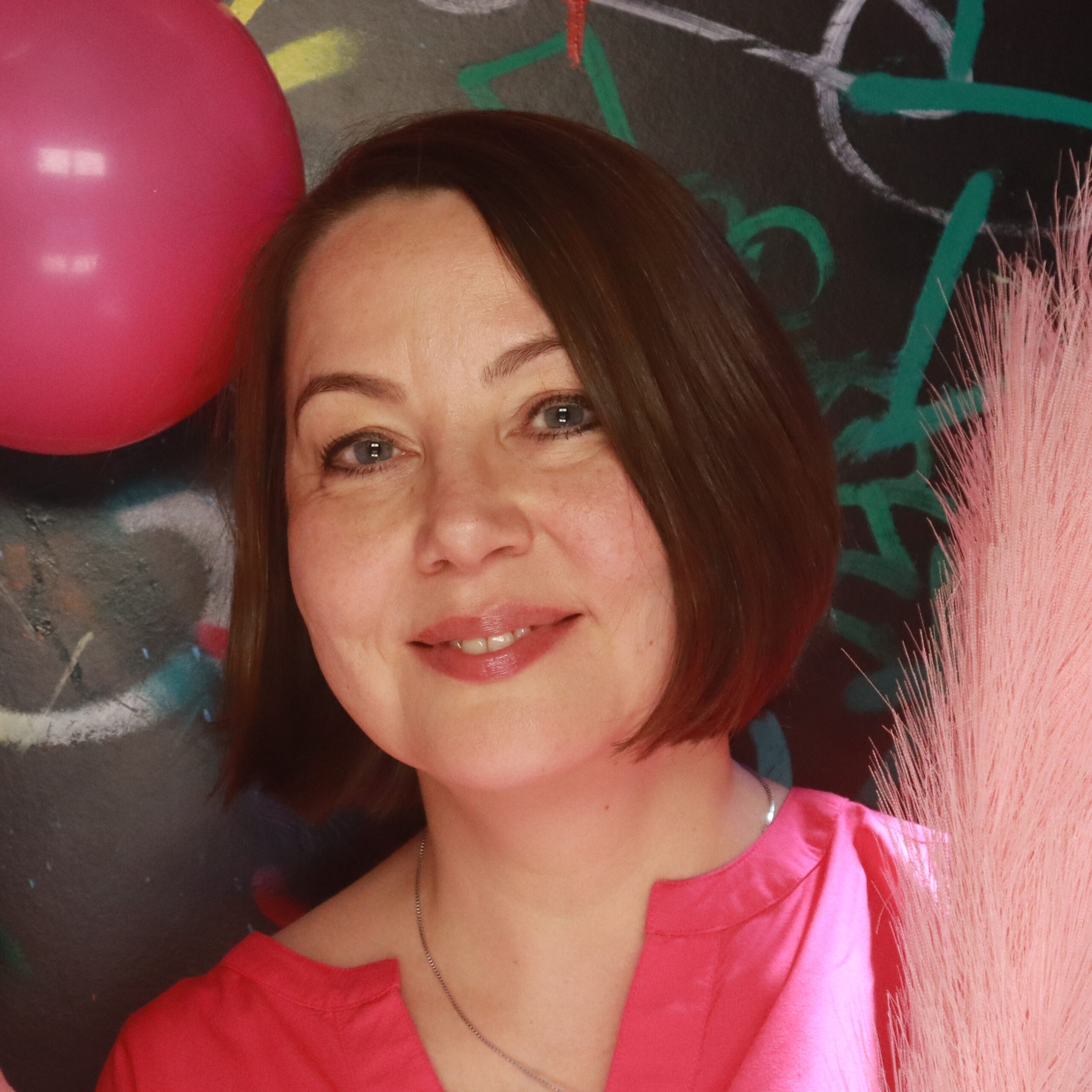
Eva-Maria Villnow
has been working at Rheinmetall Electronics in Bremen for 14 years. In 2021, she developed breast cancer. Following surgery, chemotherapy, radiotherapy and further treatment, she is now tumour-free and receives constant regular follow-up care. She draws strength from being close to her two daughters and close female friends, as well as from her connection with nature. Her experiences with her illness have made her more aware of how important human connection, a sense of belonging and support are during difficult times in life.
What got you through this period of uncertainty and helped you cope with the fear of not making it?
Eva-Maria Villnow: For me, it was mainly my daughters, my female friends, my dog and nature. What has remained to this day is the desire to create new moments each day that make me feel alive: to travel, to meet people, to learn languages and to keep discovering new things. Everything that connects me to life and the people around me.
What support did you find at Rheinmetall? Was there a network or did you have specific points of contact within the company?
Julia Stump: Besides my supervisor, who supported me with great empathy, ViVa family service was an important point of contact. They offer help in many different situations, such as with childcare, caring for relatives or dealing with cancer. I also really appreciated having the option of contacting the company’s social counsellors.
Many people remain silent for fear of saying the wrong thing. How does one find the right words?
Eva-Maria Villnow: When we meet someone with cancer, we sometimes feel our own uncertainty too. We are often not used to dealing with serious illnesses and death. Some people cannot bear it and pull themselves back. This makes those who stay all the more important. No one has to find the perfect words. Reaching out to one another is a good start. Be brave, knock on the door and say: “I’ll be there”.
Julia Stump: One of my friends wrote me short, encouraging messages on a pink piece of paper and sent me a photo of them at each day of my chemotherapy. To outsiders, these are just small gestures, but to those going through it, they mean the world. Just ask: “What do you need? What can I do?” And if you’re missing the words, just bring some lasagne.
You feared for your lives and were worried about what would become of your families. How did you manage to stop that fear from taking over?
Julia Stump: Of course, I feared for my life. But my fear for my children was even bigger. I know from personal experience what it feels to lose a parent at a young age. Giving up was therefore never an option. After my diagnosis, I immediately switched into a fighting mode. Your greatest enemy is your own mind. That’s why it’s so important to break out of those spiralling thoughts.
Eva-Maria Villnow: I’m not stronger than anyone else. I’ve simply found a way to cope with the illness and take life as it comes. I enjoy every new day. Facing life with courage also means facing death – your own or that of others. That can be painful or frightening. And sometimes you can’t manage it on your own. In those cases, it’s important to accept the support that’s available.
You both have experienced extreme situations that have changed you and made your strengths even more apparent. What lessons have you learnt from this – including for people who aren’t ill? Do you have any practical suggestions for everyday life?
Julia Stump: Life’s too short of not enjoying it. Every day I appreciate it and don’t put things off anymore. Just give it a go – it might turn out well. Also, I always say: trust your gut. If you feel that something’s not right, don’t let anyone brush you off and go for a check-up.
Eva-Maria Villnow: As my strength came back, I took every opportunity and wanted to experience as much as possible. Today, I’m more selective and clearer about my life, what I want and what I don’t want. I decide more quickly, I’m more spontaneous and, in many ways, more relaxed. Enjoy the being and what’s on offer. Don’t wait until some point in the future when everything seems to be just right. Your perspective changes when a diagnosis suddenly appears in the picture. Take good care of yourselves and go for your screening appointments! There are many things in life we cannot control, but we can influence how we deal with them. And don’t forget: there are many ways oshowing someone that they matter. In the end, we don’t remember every word. But we do remember who stayed by our side.

Click here to receive push notifications. By giving your consent, you will receive regular updates about new articles on the Dimensions website. This notification service can be cancelled at any time in your browser settings or your mobile device settings. Your consent expressly also covers data transfers to third countries. Further information can be found in our privacy policy under Section 5.