Where high technology meets nature, responsibility is required. The Black Grouse, a rare and strictly protected species, lives on Rheinmetall’s test centre in Unterlüß. The group has been actively involved in preserving this fascinating species for decades.
At a glance: The Black Grouse in Unterlüß
A bird with a long history
(Image: Freepik)
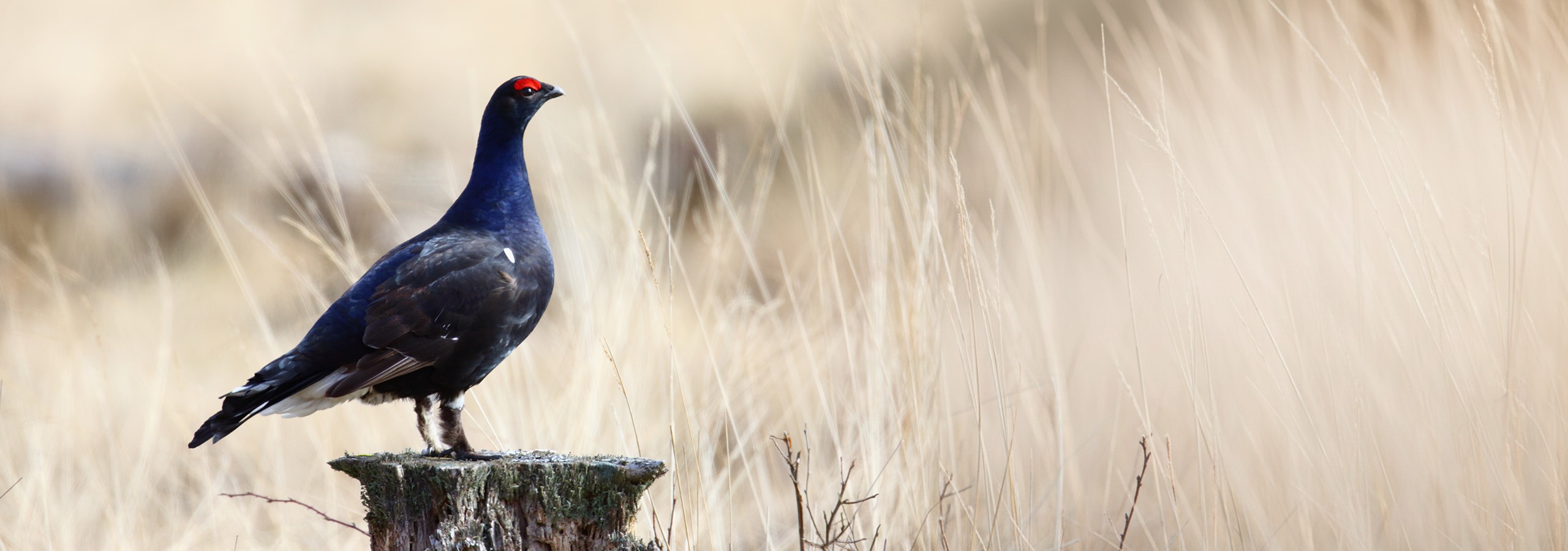
The Black Grouse (Tetrao tetrix) is one of the characteristic species of the heathland landscape – and is now threatened with extinction in Germany.
A refuge for the Black Grouse
The Unterlüß firing range is home to one of the last stable Black Grouse populations in the Northern Plain of Germany. The area covers around 50 square kilometres of heathland, forest and open land.
(Image: Rheinmetall)
Why Unterlüß is so important
The open heathland provides ideal breeding and feeding conditions. Restricted public access ensures quietness – a decisive advantage for these shy animals.
(Image: Rheinmetall)
What is Rheinmetall doing
Biologists monitor the population on a regular basis. To prevent shrub encroachment, the company actively manages the heathland areas. Rheinmetall works in close cooperation with nature conservation authorities and experts.
What does this mean for the future
Preserving the black grouse is a long-term commitment – and an example of how industrial sites can unexpectedly become refuges for nature.
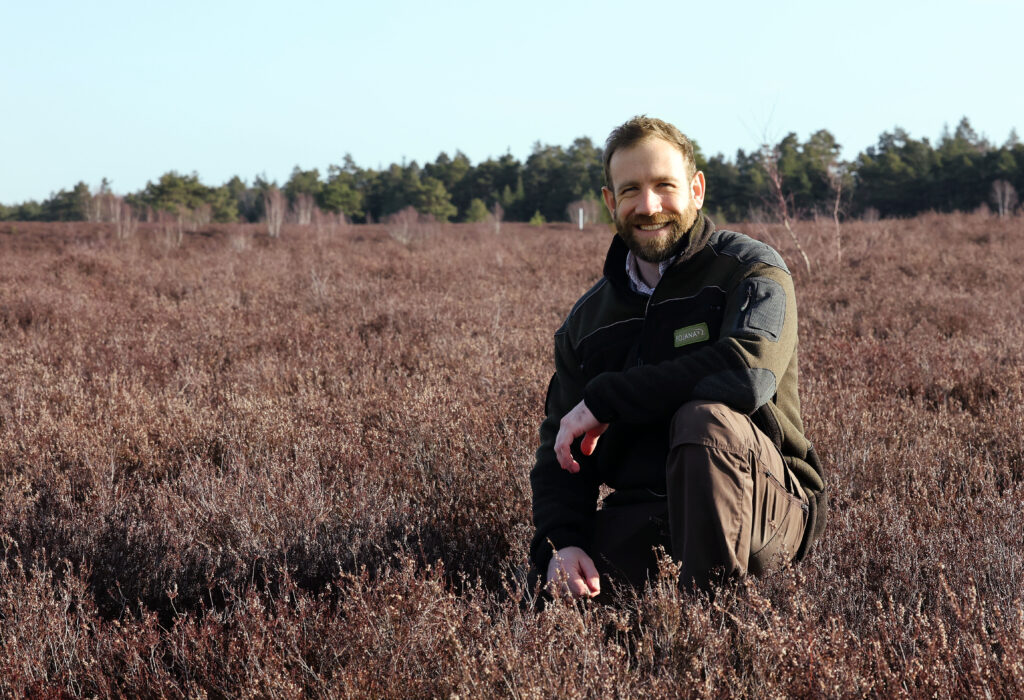
Shortly after sunrise, Hermann Christoph Mielich enters the heathland at the edge of the Unterlüß firing range. The grass is still covered in dew, and the air is cool and clear. In the distance, the soft flutter of wings can be heard as a black grouse takes off and disappears over the heathland ridges. “Moments like these have become rare”, says the forestry engineer. “And that’s exactly why we must do everything we can to preserve them”.
A place of retreat amidst military use
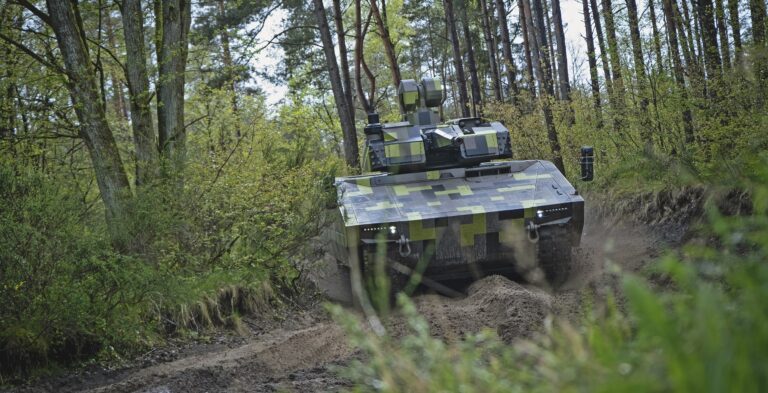
The Unterlüß firing range is considered to be one of the largest in Germany. Ballistics tests are carried out here and military vehicles are tested – while at the same time, habitats are being protected. Covering around 50 square kilometres, the site has become a valuable refuge for many increasingly rare species, including the highly endangered Black Grouse. In Germany, this breeding bird with the Latin name Tetrao tetrix, is now found in only a few regions. Autochthonous populations exist solely in the Alps and in the Lüneburg Heath.
The open heathland areas, which have been preserved in northern Germany through military use, offer ideal conditions for this shy bird species. The site is inaccessible to the public and therefore remains largely undisturbed, which is an effective protective factor for species such as the Black Grouse.
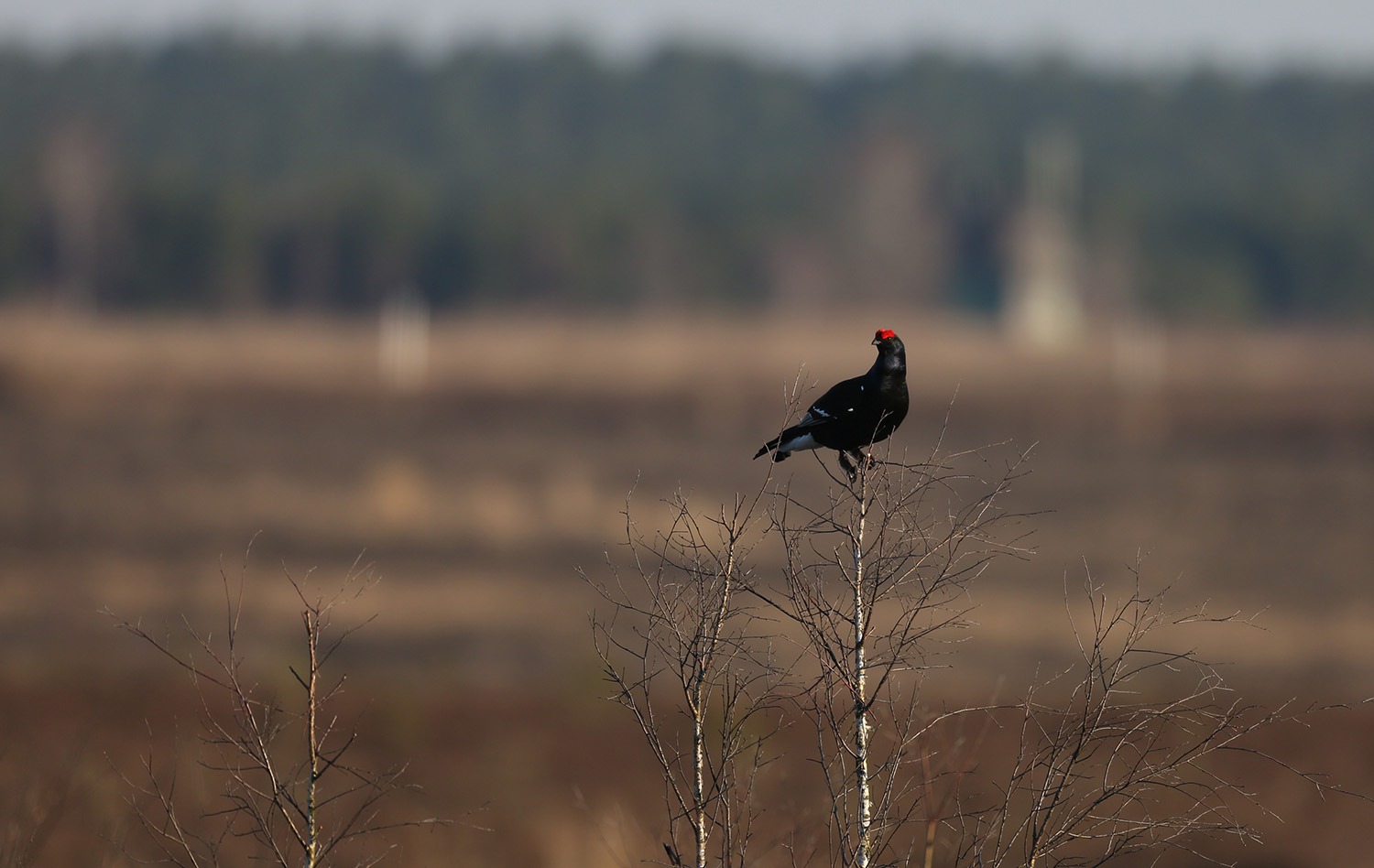
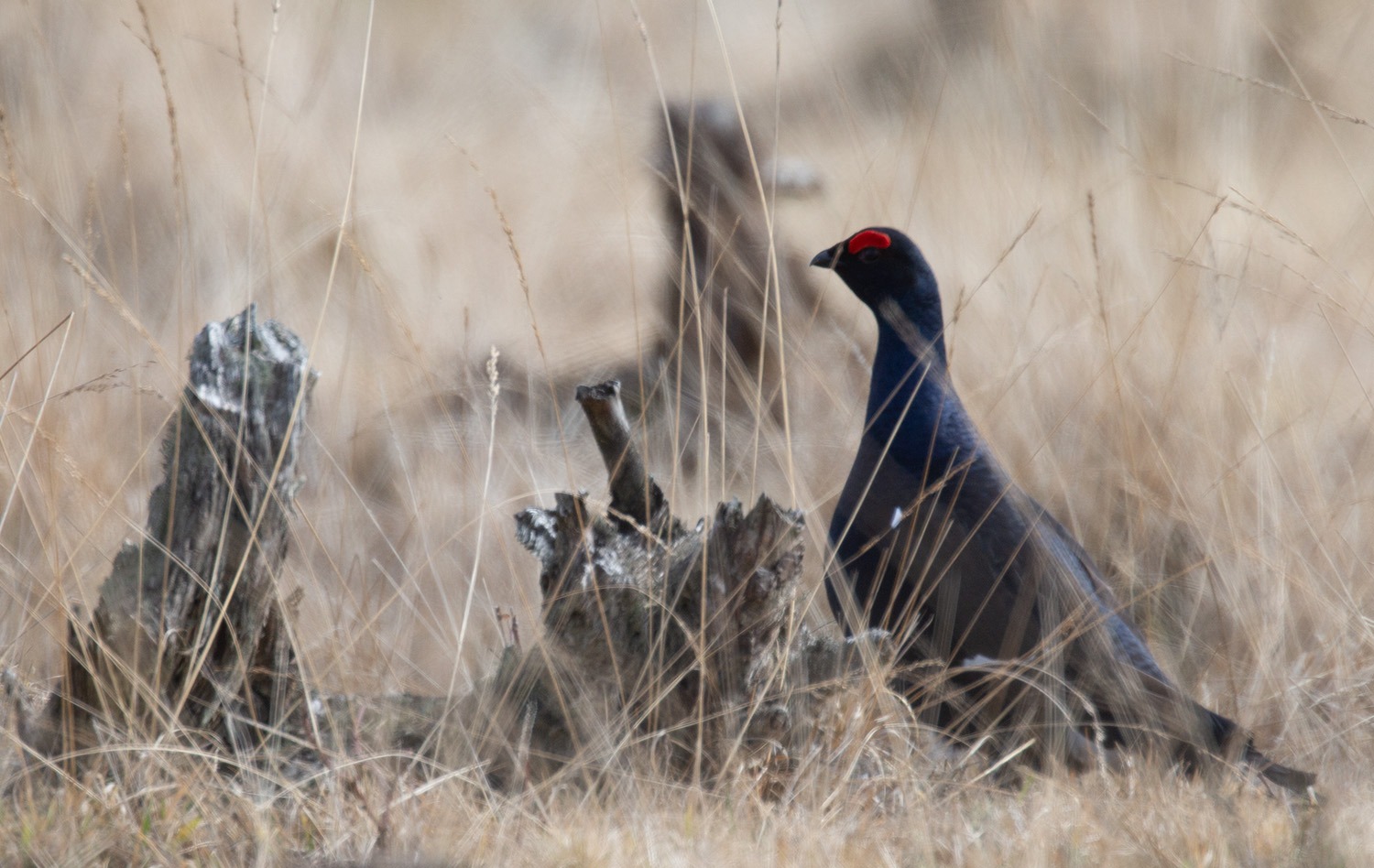
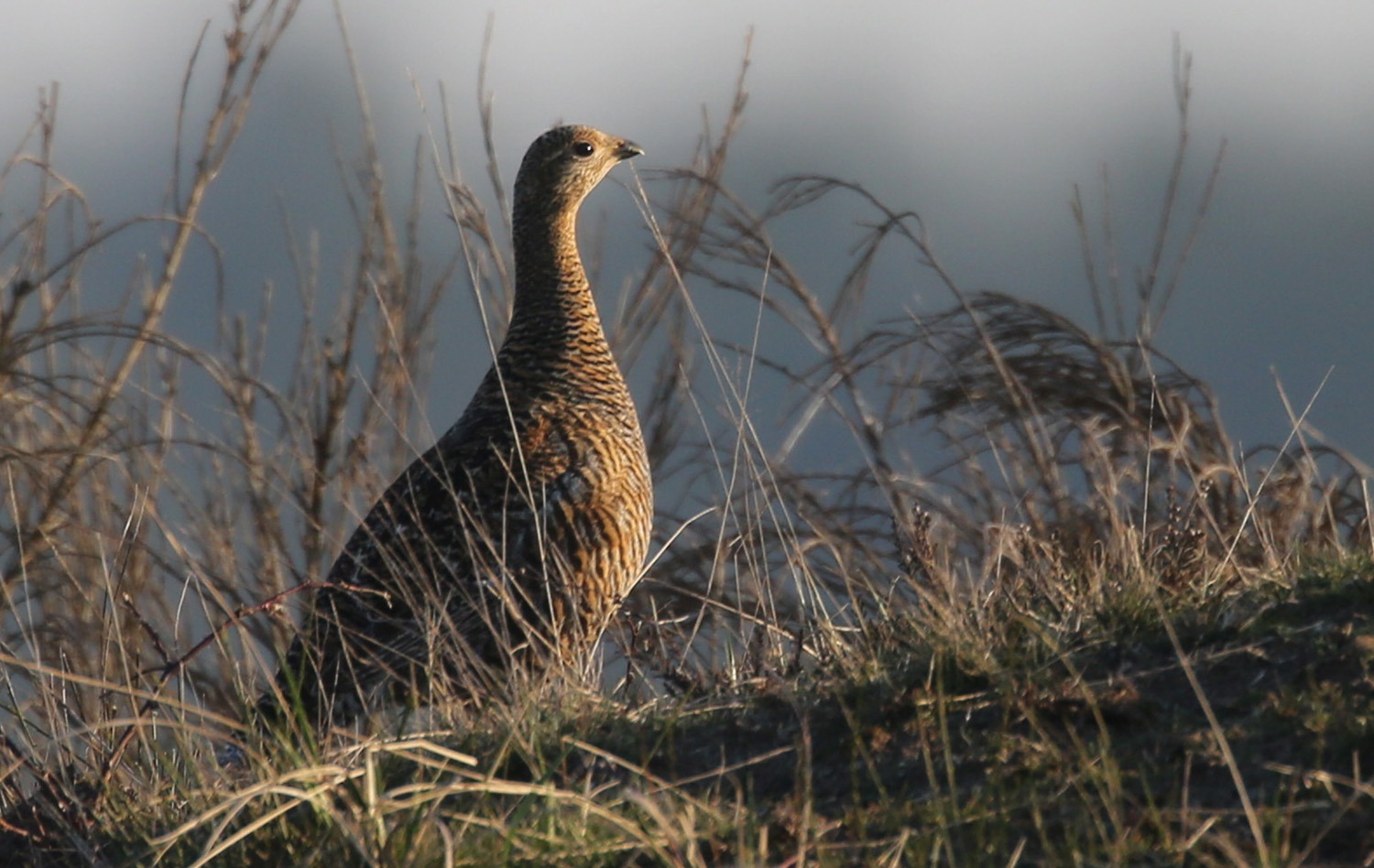
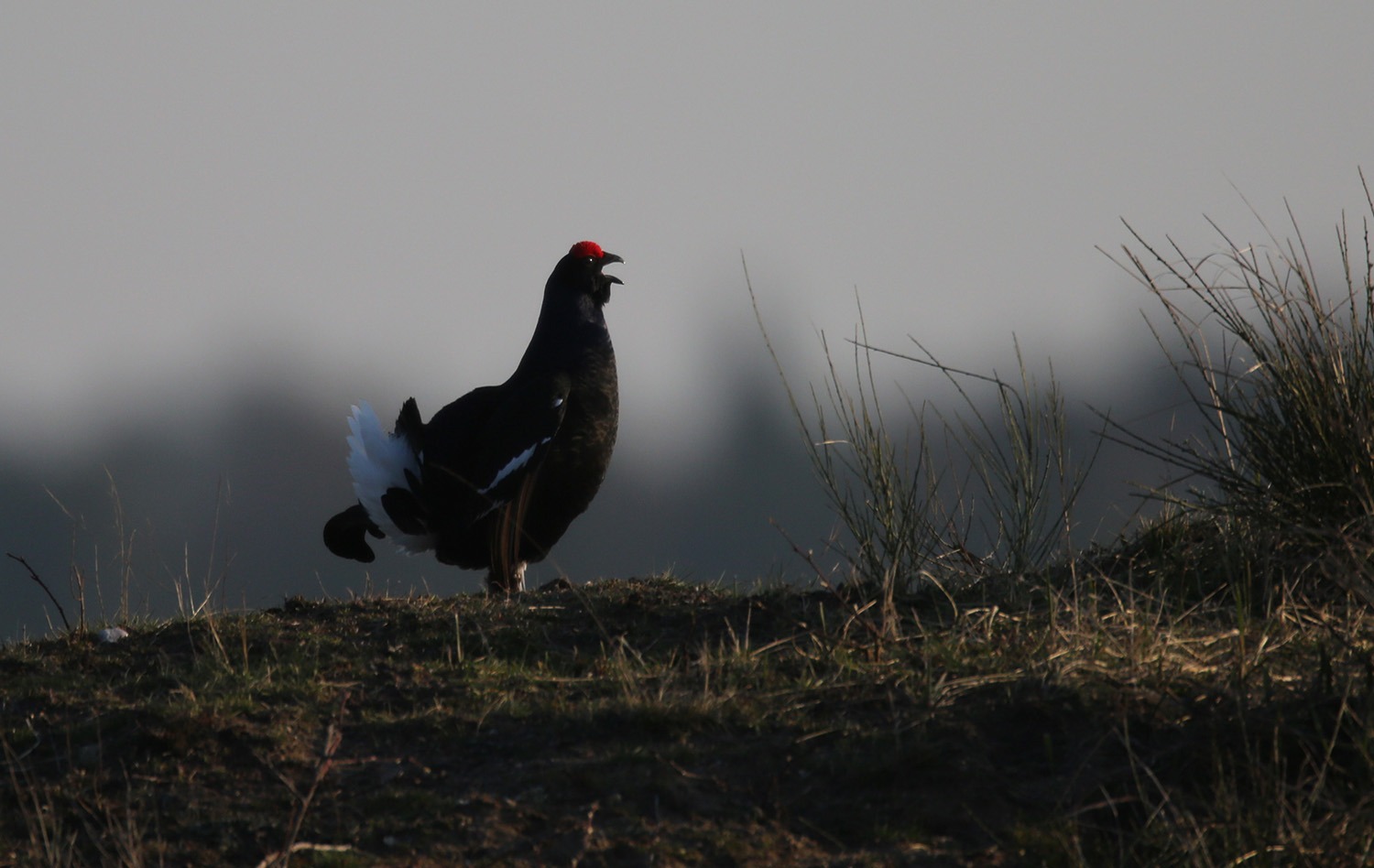
In lowland areas, the Black Grouse generally inhabits large, structurally diverse heathland and marshland as well as heavily thinned woodland. Rheinmetall’s test centre in Unterlüß offers ideal living conditions for this breeding bird, which has become rare in Germany. (Image: Rheinmetall)
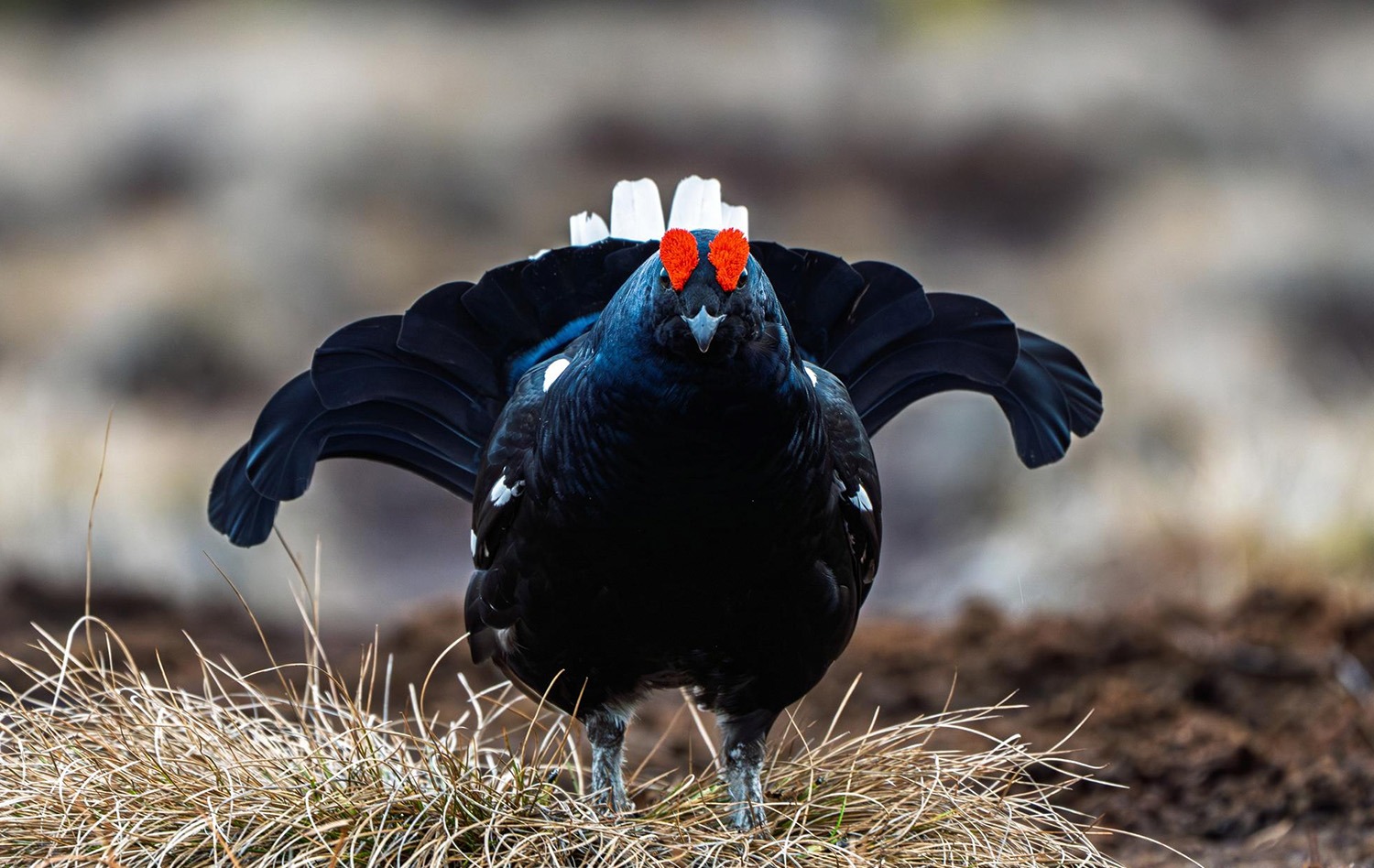
In spring, the males impress with their spectacular courtship dances. Their rolling and hissing calls can already be heard from afar. (Image: Rheinmetall)
Active Wildlife protection
“The heathland needs to be kept open. Without precise maintenance, it would overgrow with bushes and eventually turn into a forest, causing the Black Grouse to disappear”, Mielich explains. “Our task is to actively preserve this habitat. Black Grouse have lived in Germany since the last Ice Age. However, due to the almost complete disappearance of large open areas and the predominance of industrial agriculture, ground-nesting bird species have declined sharply in recent decades. Consequently, the Black Grouse, once found across large areas of Lower-Saxony, has disappeared from many areas and now only remains only in five sub-populations in the Northern Plain of Germany”.
“We don’t just consider protecting Black Grouse as an obligation, but as part of our identity. As a technology group, we bear responsibility – including for the natural environment on our grounds. Around 25 Black Grouse currently live on our site in Unterlüß”.
Hermann Christoph Mielich, forestry engineer at the Unterlüß site
Rheinmetall takes its responsibility for the environment and biodiversity seriously. In close cooperation with the authorities and external experts, the company has established precises measures to protect the Black Grouse in Unterlüß:
Monitoring by in-house specialised staff: Annual spring counts during the mating season help to identify developments at an early stage and adapt protective measures accordingly. Hermann Christoph Mielich and his team report all findings to the state bird conservation office [ornithological institute] and the local nature conservation authorities.
Habitat management: Controlled shrub clearance and precises heathland management preserve the open habitat required by the Black Grouse.
Research to preserve genetic diversity
A particular focus is placed on the scientific monitoring of the population. Small, isolated populations such as those in the Lüneburg Heath are struggling to maintain their genetic diversity. Rheinmetall therefore supports corresponding research projects with a donation of €10,000. Using modern genetic analyses, ornithologists examine the condition and connectivity of Black Grouse populations. “We work closely with experts and authorities in order to make data-based decisions”, Mielich explains. “Only if we understand how the population is developing, we can take appropriate measures”.
A partnership-based approach within the regional action plan
The protection of the Black Grouse is a joint project. Rheinmetall is part of a regional action plan that coordinates and prioritises measures. Partners involved include nature conservation authorities, forestry administrations, hunting associations and research institutions. Specifically, the following organisations are working together: the Nature Conservation Park Association (VNP), the state, federal and monastic forestry administrations, the Lower-Saxony Ministry of Food, Agriculture and Consumer Protection (ML), the Lower-Saxony Ministry for the Environment, Energy and Climate Protection (MU), the state bird conservation office of the Lower-Saxony Agency for Water Management, Coastal Defence and Nature Conservation (NLWKN), the Bundeswehr, the Lower-Saxony Hunting Association, the Northern German Academy for Nature Conservation (NNA), the Institute for Terrestrial and Aquatic Wildlife Research (ITAW) and, of course, Rheinmetall.
“Nature conservation only works as a joint effort”, Mielich emphasises. “No single player can tackle such a task alone. Our role is to contribute our land, expertise and resources”.
Technology and nature – not a contradiction
For forestry engineer Mielich, the firing range is not only an industrial site, but also a complex ecosystem. “Modern defence technology and sensitive natural habitats meet here directly”, he says. “That requires planning, dialogue and sometimes restraint”. The successful coexistence of defence research and species protection in Unterlüß shows that both are possible with foresight and cooperation. Rheinmetall demonstrates that modern defence technology and the protection of rare species do not have to be a contradiction.
“We think in terms of decades, not in years”, Mielich emphasises. “If we act correctly today, future generations will also be able to experience the Black Grouse on the heath”. Protecting the Black Grouse is part of the Group’s broader understanding of sustainability. Rheinmetall is implementing measures to preserve biodiversity at other locations, too, and is continuously developing them. What once seemed like a contradiction is now understood as an opportunity: protecting nature where technology is at work.
More information about the Rheinmetall Group and its responsible approach to nature and its resources can be found here.
Never miss an article again
Click here to receive push notifications. By giving your consent, you will receive regular updates about new articles on the Dimensions website. This notification service can be cancelled at any time in your browser settings or your mobile device settings. Your consent expressly also covers data transfers to third countries. Further information can be found in our privacy policy under Section 5.
Click here to receive push notifications. By giving your consent, you will receive regular updates about new articles on the Dimensions website. This notification service can be cancelled at any time in your browser settings or your mobile device settings. Your consent expressly also covers data transfers to third countries. Further information can be found in our privacy policy under Section 5.